Self-service kiosks are rapidly evolving as businesses adopt faster and more convenient payment options. If you’re considering installing a kiosk for your business, contactless and cashless payment features are likely high on your priority list.
Today’s kiosks allow customers to pay quickly using mobile wallets, tap-to-pay cards, or QR codes. In questo articolo, you’ll discover which types of kiosks offer these payment options and how they can benefit your operations.
What Are Contactless and Cashless Payment Kiosks?
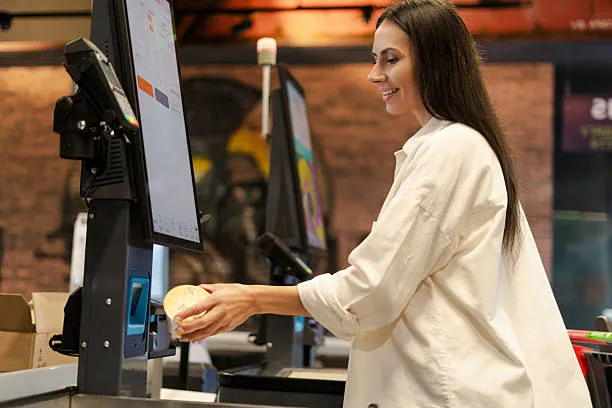
At its simplest, a contactless kiosk is a self-service terminal designed to complete transactions without physical contact. This process relies on a secure communication link between the user’s device and the terminal. Instead of the mechanical action of swiping a card or inserting a chip, the user holds a smartphone, smartwatch, or contactless card near a dedicated reader.
In technical terms, this is often referred to as EMV Contactless. From a manufacturing perspective, this involves integrating a specialized NFC (Comunicazione sul campo vicino) module behind the protective glass. For business operators, this technology eliminates mechanical failures like jammed coin slots. It provides a cleaner, Più veloce, and more reliable transaction environment compared to traditional cash-heavy systems.
Types of Self-Service Kiosks Supporting Cashless Payments
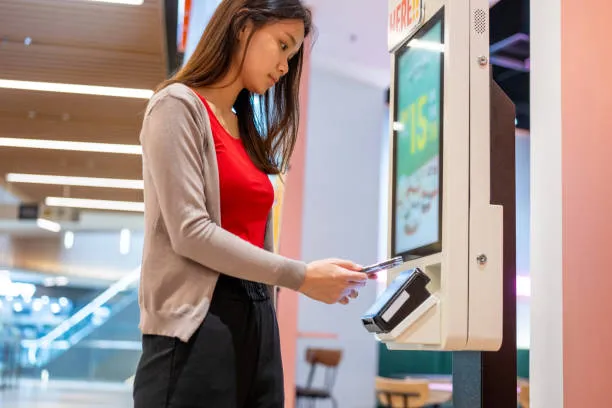
Kiosk architecture varies significantly by industry. Payment integration must be engineered to handle specific transaction volumes and environmental conditions.
Restaurant Self-Ordering Kiosk
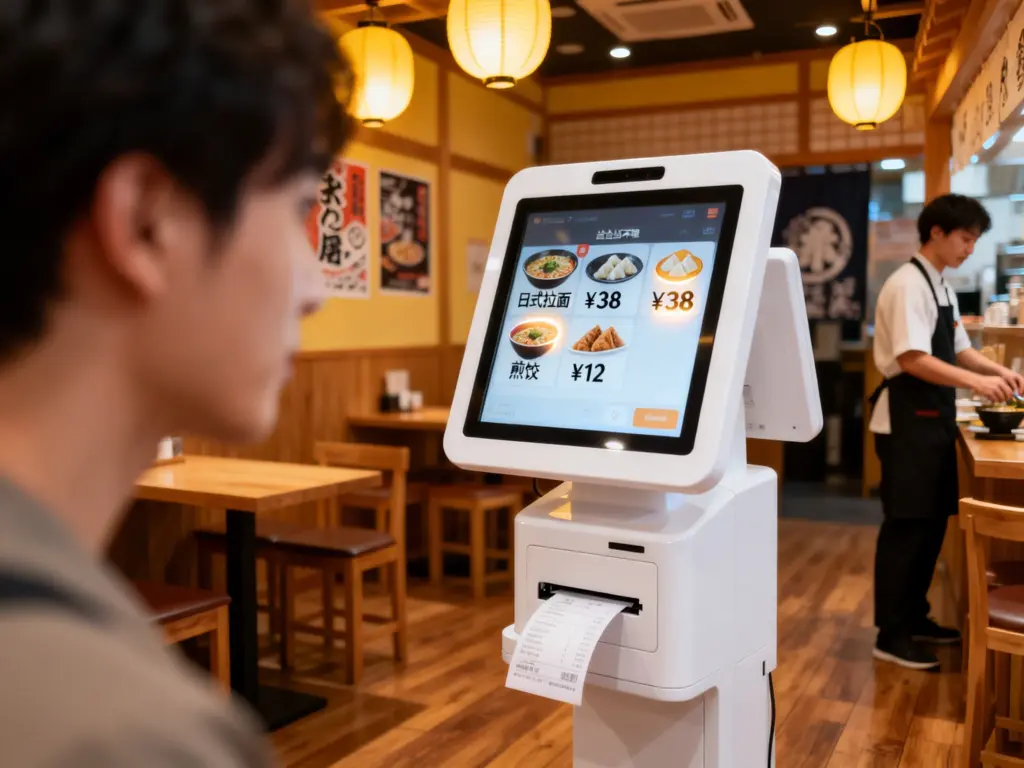
In the Quick Service Restaurant (QSR) sector, transaction speed is the most critical KPI. Industry data show a clear efficiency gain. When ristoranti transition to a high-performance self-ordering kiosk, average transaction times drop from 45 seconds to approximately 15 secondi.
Most modern units now feature integrated credit card brackets optimized for contactless payments. Beyond efficiency, the benefits of self-ordering kiosk systems are proven revenue drivers. Data suggests that digital interfaces can increase average ticket sizes by up to 30%. Digital menus allow for consistent, automated upselling suggestions without social pressure.
Retail Self-Checkout Kiosks
The retail landscape is shifting toward slim and modular designs. Questi chioschi self-service utilize high-speed 2D barcode scanners paired with dedicated cashless terminals. To ensure the user experience remains fluid, these machines are typically equipped with PCAP (Capacitivo proiettato) touch screen.
Latency is a critical factor in retail. If a screen takes even a second to respond, the user may perceive the payment process as insecure. Di conseguenza, professional retail kiosks prioritize high-refresh rates to maintain consumer trust. Modular designs also allow retailers to swap out payment modules easily as new standards emerge.
Ticketing and Transit Kiosks
Subway stations and airports are high-abuse environments requiring ruggedized hardware. Manufacturing for this sector prioritizes IK10 vandal-proof ratings and weather-resistant NFC readers. Contactless technology is essential here to facilitate high throughput. Commuters increasingly prefer tapping a wearable device over purchasing physical paper tickets. For operators, the shift to cashless removes the logistical burden associated with physical cash collection.
Parking Payment Kiosks
Parking terminals are often situated outdoors and exposed to extreme temperatures. To remain functional, these kiosks require high-brightness displays. This ensures that payment prompts remain visible even in direct sunlight. Transitioning to cashless parking solves a major operational headache: cash shrinkage. Removing physical currency eliminates theft risks. Inoltre, cashless systems integrate seamlessly with license plate recognition (LPR) software.
Hotel Check-In Kiosks
Professional hotel kiosks often integrate RFID card dispensers directly alongside the payment terminal. This allows a guest to verify a reservation and pay for incidentals with a tap. They then receive an encoded room key in a single, continuous interaction. This level of automation allows hotel staff to focus on guest hospitality rather than administrative data entry.
Vending and Micro-Market Kiosks
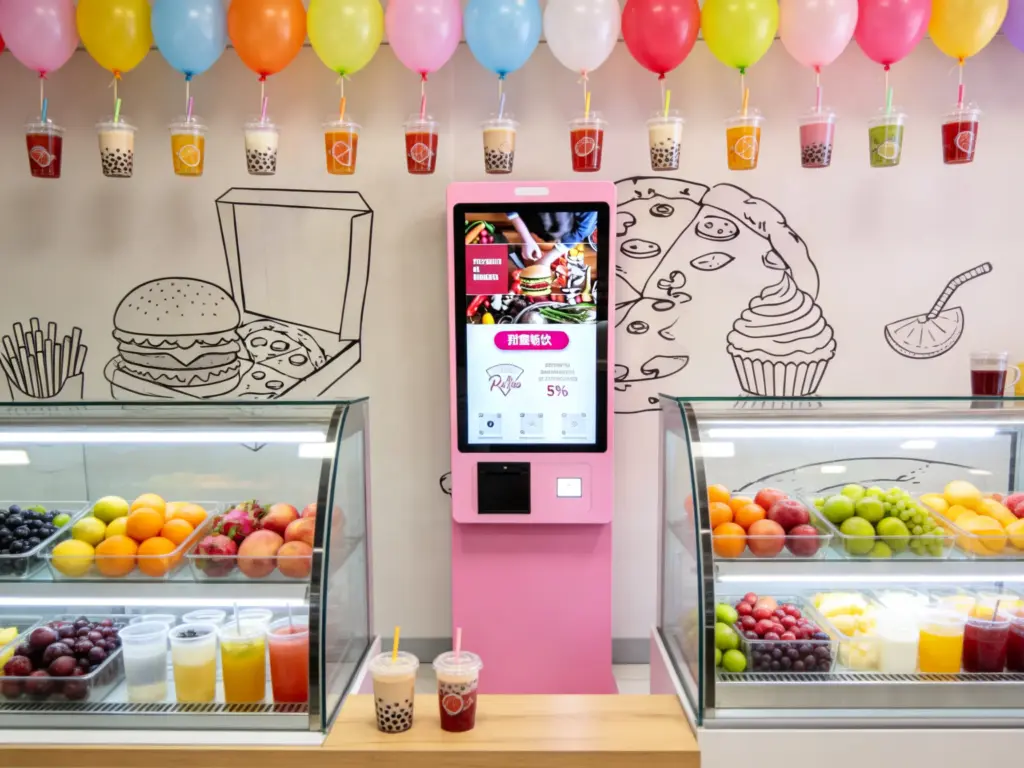
The unattended retail trend is rapidly replacing traditional vending machines with Micro-Markets. These kiosks are usually compact 10-inch or 15-inch tablets. Since the average transaction value is typically under $10, users overwhelmingly favor mobile wallets. These machines are significantly cheaper to maintain. They lack the complex mechanical hardware required to sort and process physical coins.

Touchwo Premium Self-Service Kiosks
As a leading manufacturer of high-performance hardware, Touchwo provides industrial-grade self-service kiosks designed to streamline operations. Fully customizable for modern contactless and cashless payment environments.
View Self-Service SolutionsKey Technologies Behind Contactless Payments
The seamless experience is powered by several core technologies working in tandem to bridge the gap between hardware and digital finance.
| Tecnologia | Function | Business Advantage | Ideal For |
|---|---|---|---|
| NFC | Wireless data transfer (up to 4cm). | Industry standard for mobile wallets; extremely secure. | QSRS, Transit, High-Traffic Retail |
| QR Code Imaging | Captures 2D codes from glossy screens. | Supports global platforms like PayPal and Alipay. | Micro-mercati, Event Ticketing |
| Tokenization | Replaces card data with a digital “token.” | Dramatically reduces PCI compliance risks. | All Payment-enabled Kiosks |
The Role of NFC
NFC is the primary driver of the tap-and-go movement. It creates a secure, encrypted link between the kiosk and the payment device. Because the communication range is extremely short, data interception from a distance is virtually impossible.
QR Code Scanning
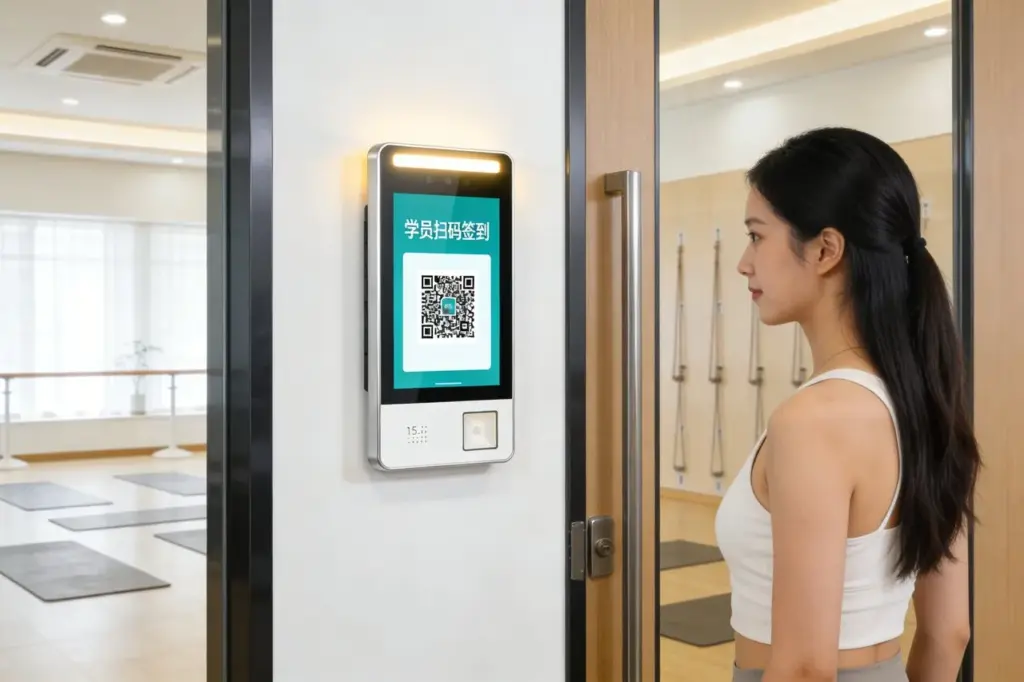
While NFC is dominant in Western markets, QR-based payments remain a global powerhouse. A professional kiosk should include a 2D image-based scanner. Unlike traditional laser scanners, these components can accurately read codes from glossy smartphone screens. They remain effective even if the screen is damaged or the brightness is low.
Integrazione del software (The SDK)
Hardware performance is dependent on the software it communicates with. Kiosks must run on flexible operating systems like Android, finestre, o Linux. These platforms should offer an open SDK (Software Development Kit) to ensure seamless integration with global payment gateways like Stripe or Adyen.
Benefits of Self-Ordering Kiosk Systems for Businesses
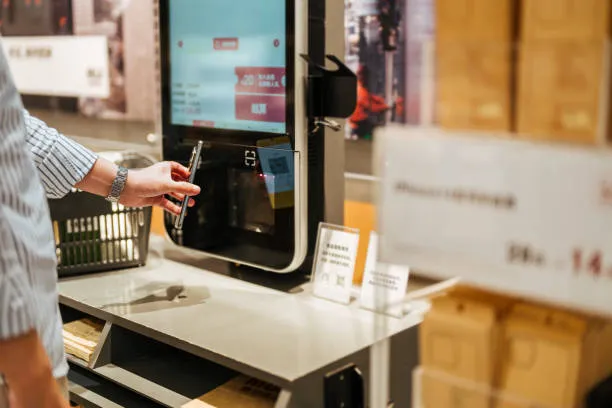
Evaluating the investment in cashless infrastructure requires a look at both the hard data and the operational advantages.
- Faster Checkout and Higher Turnover: Industry studies demonstrate that cashless transactions are 63% faster than traditional cash transactions. In high-traffic environments, this speed directly impacts the bottom line.
- Cleaner and Safer Transactions: From a health perspective, physical currency is known to carry germs and bacteria. A contactless experience serves as a safety feature. It signals to customers that a business cares about their well-being.
- Reduced Cash Shrinkage: Removing cash from the equation eliminates the temptation for internal theft. It also removes the risk of human error during end-of-day balancing. A digital paper trail provides 100% accuracy in financial reporting.
- Better Customer Experience (CX): Modern consumers expect modern solutions. A sleek, reattivo, cashless kiosk positions a business as technologically forward and professionally managed.
How to Choose the Right Contactless Payment Kiosk
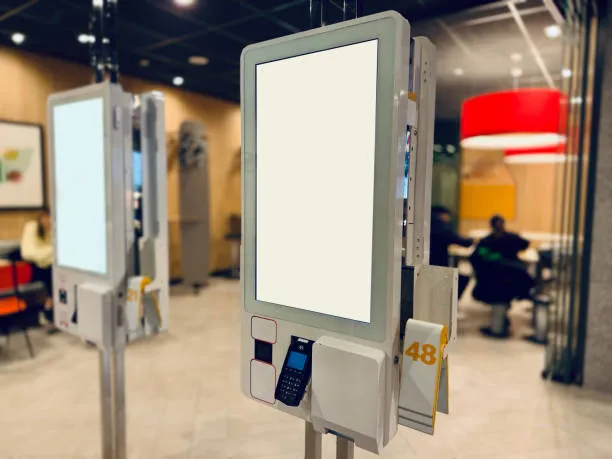
1. Hardware Compatibility and Modular Design
Proprietary or “locked” systems should be avoided. A modular peripheral design is essential because payment standards evolve. This architecture allows for the replacement of a payment bracket without replacing the entire display unit. This modularity protects the long-term investment.
2. Supported Payment Systems (The SDK)
The hardware is only one component of the solution. Ensure the kiosk’s internal computer supports an open SDK (Software Development Kit). This facilitates integration with major payment processors like Stripe or Square. Flexible OS options are a hallmark of high-quality manufacturing.
3. Kiosk Durability
Units intended for high-traffic environments must be industrial-grade. Tempered glass with a 7H hardness rating is required for scratch resistance. For outdoor applications, UN IP65 rating is the industry standard for protection against water and dust ingress.
4. Design and Branding Options
A kiosk’s physical appearance should directly align with the brand’s visual identity. Manufacturers offering Servizi OEM/ODM can customize colors and add logos. They can also modify the physical structure. This ensures the hardware integrates perfectly into specific environments.
Pensieri finali
Transitioning to contactless kiosks is essential for modern business efficiency and long-term security. By significantly reducing transaction times, these digital interfaces drive measurable revenue growth.
Touchwo specializes in manufacturing industrial-grade, modular kiosks, setting the global standard for a high-quality China self-ordering kiosk. These high-performance hardware solutions ensure reliable 24/7 operation across diverse industries.
Contattaci oggi to discover how our professional kiosk solutions can streamline your business operations and elevate your customer experience.