Raakpanele dien as die kern interaktiewe komponent vir moderne slimtoestelle. Hulle ondersteun intuïtiewe tik, sliding and selecting operations for daily self-service equipment. Selfs so, many buyers do not know that touch panels have multiple technical types.
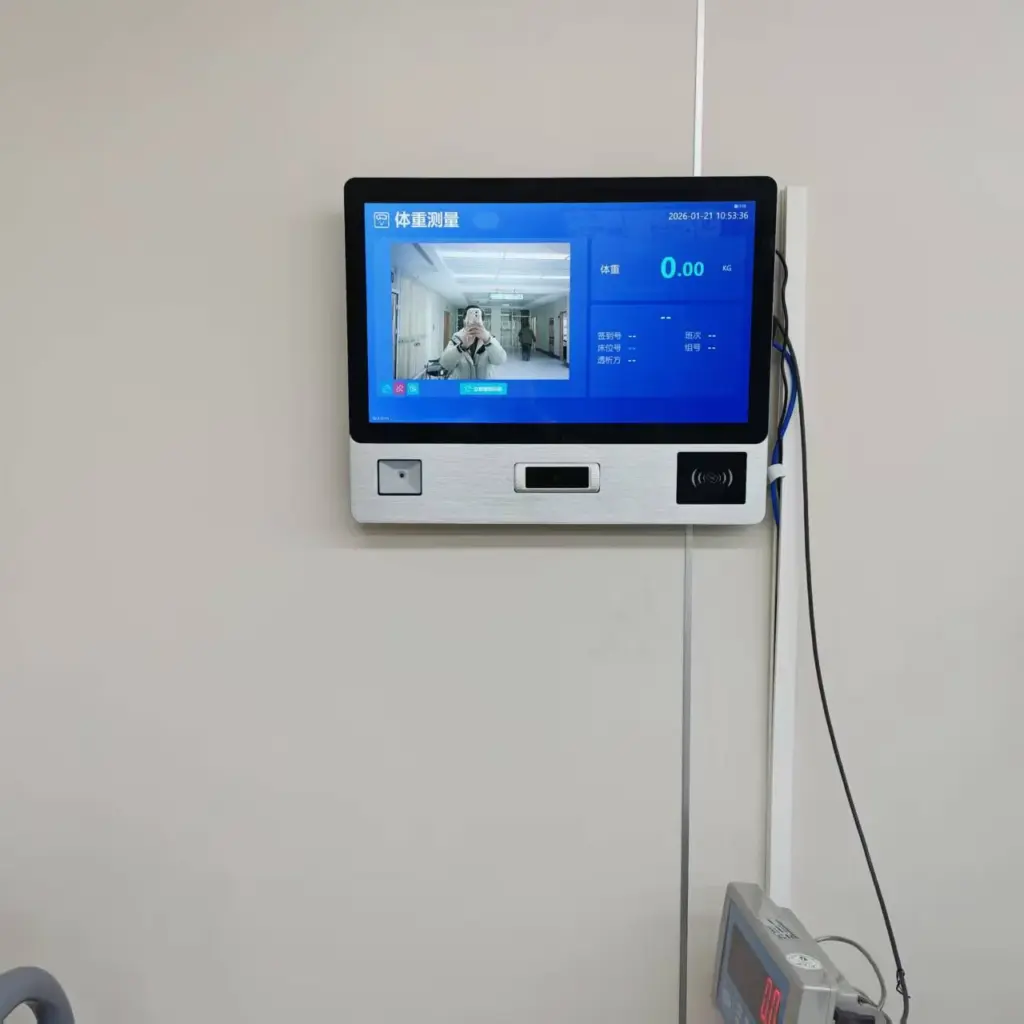
Each kind of touch panel carries distinct working principles, durability levels and application limits. Dus, choosing the wrong panel type will reduce device stability and raise replacement costs. Om hierdie rede, learning the different types of touch panels helps you match suitable hardware for kiosks and commercial displays. This article classifies mainstream touch panel types, analyzes their traits and shares practical selection tips.
The Four Main Types of Commercial Touch Panels
Current commercial markets focus on four mature touch panel types. Each fits specific industrial and commercial scenarios.
1. Resistive Touch Panels
Resistive touch panel rely on physical pressure to trigger signals. They have two conductive film layers with a tiny gap in between. Pressure presses the layers together and creates a conductive point. The system then calculates accurate touch coordinates.
These panels accept input from any hard object. Gloved fingers, styluses and nails all work smoothly. They also have low production costs and stable basic performance. They suit industrial equipment and low-budget indoor devices.
2. Capacitive Touch Panels
Capacitive touch panel sense tiny human body electric charges. They do not need pressure to complete touch recognition. They support fast response, smooth sliding and multi-touch gestures.
These panels deliver high definition and scratch resistance. They fit most commercial self-service kiosks, retail terminals and smart displays. They become the most popular touch panel type for daily consumer and business devices.
3. Infrared Touch Panels
Infrared touch panel build an invisible infrared light grid on the screen frame. Any object that blocks the light beam triggers a touch signal. They need no conductive coating on the display surface.
They feature ultra-high durability and strong environmental adaptability. They support super-large screen sizes and work well in bright light. Public inquiry screens, exhibition displays and outdoor devices widely use infrared touch panels.
4. Surface Acoustic Wave Touch Panels
Surface acoustic wave touch panel use ultrasonic wave detection technology. They track wave changes to locate touch points accurately. They feature high light transmittance and clear display effects.
They resist surface dust and water interference effectively. They maintain sensitive recognition after long-term use. They mainly apply to high-precision commercial displays and industrial control terminals.
Key Pros and Cons of Each Touch Panel Type
Understanding advantages and drawbacks helps you avoid improper matching. Each touch panel has obvious scenario-specific strengths.
1. Resistive touch panel pros and cons
Resistive panels have affordable prices and anti-interference ability. They work normally in dusty and humid environments. Egter, they lack multi-touch support and feel less smooth during sliding operations.
2. Capacitive touch panel pros and cons
Capacitive panels offer sensitive response, multi-touch functions and clear visuals. They resist daily scratches and fit long-hour commercial use. Yet they cannot recognize gloved touches and cost more than resistive models.
3. Infrared touch panel pros and cons
Infrared panel support unlimited screen sizes and all-object recognition. They have long service lifespans and simple maintenance. Nevertheless, external light interference may affect recognition accuracy in extreme environments.
4. Surface acoustic wave touch panel pros and cons
These panels deliver top-level display clarity and stable sensitivity. They adapt to high-precision operation needs. But they have higher failure rates in heavily dusty industrial scenes.
Best Application Scenarios for Different Touch Panels
You can match touch panel types according to your device usage environment.
1. Resistive panels for industrial and low-end devices
Industrial control equipment, factory terminals and old-style query machines prefer resistive touch panel. Their pressure-sensing design adapts to complex workshop environments.
2. Capacitive panels for commercial self-service devices
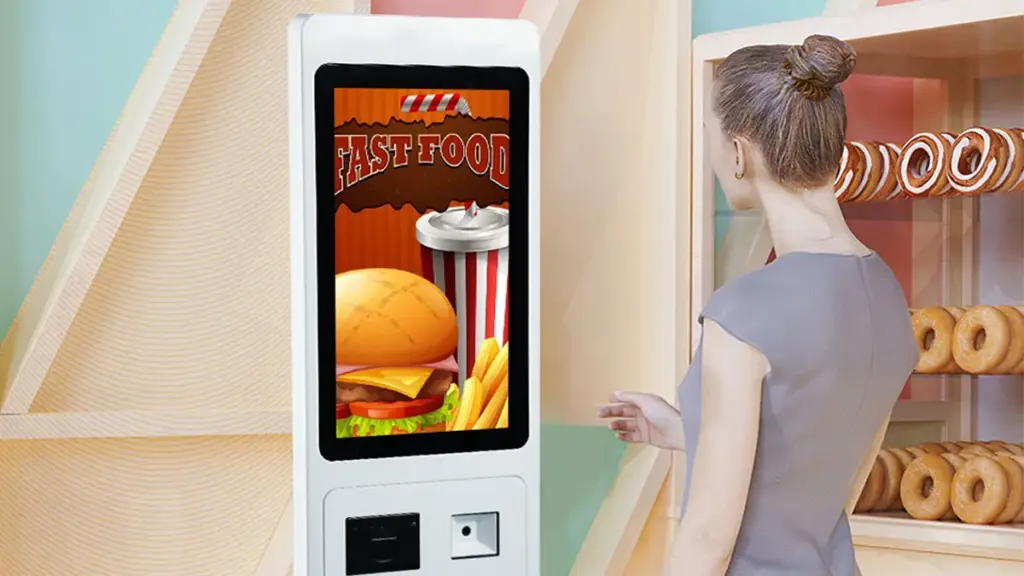
Selfbedieningskiosks, ordering terminals and retail payment devices prioritize capacitive touch panel. They balance sensitivity, appearance and durability perfectly for customer-facing scenarios.
3. Infrared panels for large public display screens
Super-large splicing screens, exhibition booth displays and outdoor guidance terminals choose infrared touch panels. They support oversized sizes and stable public scene operation.
4. Acoustic wave panels for high-precision display devices
Medical displays, precision query terminals and high-end commercial screens adopt acoustic wave touch panels. They pursue ultra-clear visuals and accurate touch feedback.
Practical Tips to Choose Suitable Touch Panels
These simple rules help you select cost-effective touch panels for your project.
1. Confirm your daily operation environment
Choose resistive panels for dusty, humid industrial sites. Pick capacitive panels for clean indoor commercial venues. Select infrared panels for large-size and outdoor display needs.
2. Clarify required touch functions
Select multi-touch capacitive panels if you need gesture control. Choose resistive panels if users often wear gloves during operation.
3. Balance budget and service life
Capacitive and infrared panels have higher upfront costs but longer lifespans. Resistive panels lower initial investment but need more frequent replacement.
FAQs About Different Types of Touch Panels
V1: What are the most common types of touch panels for kiosks?
A1: Capacitive touch panels dominate commercial self-service kiosks. They deliver sensitive response, multi-touch support and stable daily performance for customer interaction.
V2: Which touch panel works best for gloved operation?
A2: Resistive and infrared touch panel support gloved touches. They rely on pressure or light blocking instead of human body induction.
V3: What touch panel type fits large outdoor screens?
A3: Infrared touch panels are the best choice. They support ultra-large sizes and resist daily outdoor light and temperature changes.
V4: Do capacitive touch panels wear out easily?
A4: Nee. Commercial-grade capacitive touch panel have scratch-resistant surfaces. They maintain stable sensitivity after millions of daily touches.
V5: Which touch panel has the lowest maintenance cost?
A5: Infrared touch panels need the least maintenance. They have no fragile coating layers and resist dust and water interference effectively.
Gevolgtrekking
Om op te som, four mainstream types of touch panels cover current commercial and industrial needs. Resistive panels suit low-budget and industrial pressure operation scenarios. Capacitive panels serve most self-service kiosks and commercial terminals with smooth performance. Infrared panels adapt to large-size public display equipment. Surface acoustic wave panels meet high-precision display demands. Each touch panel type has unique strengths for targeted usage environments. Reasonable selection greatly improves device stability and reduces long-term maintenance costs.
If you need customized high-performance touch panel for your self-service kiosks and smart display devices, vul asseblief die navraagvorm op ons amptelike webwerf in. Share your screen size, usage environment and functional requirements, and our team will provide matched professional touch panel solutions.