في بيئات الرعاية الصحية, deploying medical-grade monitors remains a strict regulatory requirement. It is not an optional upgrade. Clinical displays cost significantly more than commercial screens with identical specifications. You need to understand exactly what that premium covers. The true difference lies entirely beneath the casing. Medical monitors are specifically engineered to ensure absolute diagnostic accuracy, prevent electrical interference, and survive harsh daily disinfection protocols.
What Is a Medical-Grade Monitor?
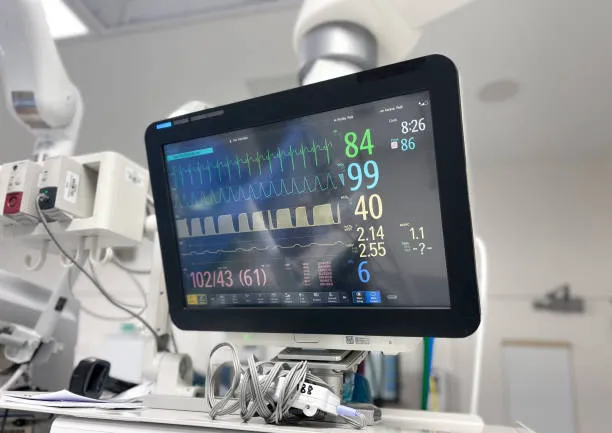
A medical-grade monitor is a specialized display. It combines regulated safety design with precise visual performance. Depending on your application, these monitors must comply with IEC 60601-1 standards for medical electrical safety. They also support stable grayscale presentation through DICOM-oriented معايرة. Built-in stabilization systems maintain consistent brightness over time.
These displays easily survive conditions that destroy standard consumer monitors. Your الرعاىة الصحية display may run around the clock. Staff will wipe it repeatedly with aggressive disinfectants. This is why medical-oriented monitors utilize more durable enclosures and easier-to-sanitize surfaces.
باختصار, you get much more than better image quality. You are investing in risk reduction. Small visual or electrical failures can lead to severe clinical consequences.
Medical-Grade Monitors vs Regular Monitors: الاختلافات الرئيسية
Grayscale Precision and DICOM Calibration
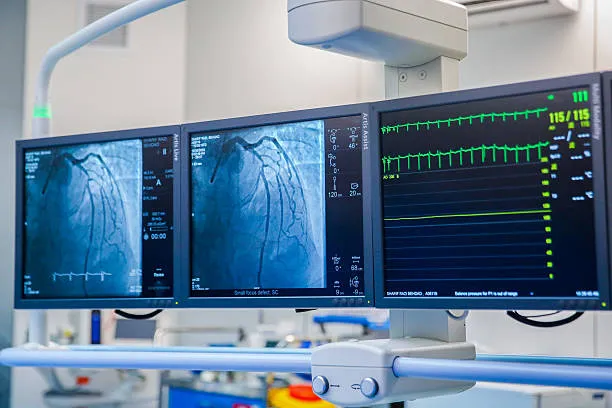
Regular office monitors crush subtle dark grays into pure black. But medical displays use mathematical calibration to meet the strict DICOM Part 14 global standard. Diagnostic monitors feature advanced 10-bit or 14-bit Look-Up Tables rather than standard 8-bit processing. This vital hardware upgrade displays thousands of precise shades of gray. It guarantees absolute clinical precision when doctors examine human tissue.
Built-in Backlight Stabilization Sensors
All monitors gradually lose brightness over time. Regular commercial screens even fluctuate in luminance as they warm up. لكن, the medical monitors overcome this issue using integrated backlight stabilization sensors. These hidden sensors constantly measure the screen’s light output in real-time. They automatically adjust the internal LED backlight. This maintains a perfectly flat, consistent luminance level. Your medical scans will always look identical.
Electrical Safety and Galvanic Isolation
Modern hospitals rely on highly sensitive, life-saving equipment. A regular consumer monitor leaks electrical micro-currents. This leakage is harmless in a home office. لكن, it can dangerously interfere with a nearby ECG machine or ventilator. To prevent this, المراقبين الطبيين must comply with strict electrical safety standards like IEC 60601-1. They utilize advanced shielding and galvanic isolation, which physically separate internal circuits to stop stray voltage interference.
Infection Control and Enclosure Design
Standard consumer monitors utilize ventilated plastic casings. If your staff wipes them down with hospital-grade bleach or hydrogen peroxide, corrosive liquids will quickly seep inside. It will damage the motherboard and cause an electrical short circuit. Conversely, medical displays are constructed with sealed, IP-rated waterproof enclosures. بالإضافة إلى, their internal circuit boards are often treated with a specialized conformal coating. That thoroughly protects sensitive electronics from moisture, تراب, and harsh medical disinfectants.
Hardware Specifications Comparison
| ميزة | Medical-Grade Monitors | Regular Monitors |
|---|---|---|
| Grayscale Accuracy | Strict DICOM Part 14 calibration for clinical precision | Standard sRGB, often crushes subtle details |
| سطوع | Auto-stabilizing sensors for lifelong consistency | Fluctuates based on temperature and age |
| Electrical Safety | IEC 60601-1 معتمد, advanced shielding | Standard commercial safety only (FCC/CE) |
| صحة | IP-rated sealed enclosures, chemical-resistant | Vented enclosures, highly vulnerable to liquids |
| Operating Lifespan | Engineered for 24/7 continuous clinical use | مصممة ل 8-10 hours of daily office use |
Does Every Screen in Your Hospital Need to be “Medical-Grade”?
لا. It is a common misconception that every monitor in your healthcare facility requires expensive diagnostic-level DICOM calibration. You must align the hardware with your specific use case:
- Diagnostic Use: Radiology reading rooms, operating theaters, and intensive care units require fully certified medical monitors to ensure patient safety and diagnostic accuracy.
- Non-Diagnostic Healthcare Use: Self-service patient check-in kiosks, nurse station terminals, pharmacy touchscreens, and hospital lobby wayfinding displays do not require diagnostic imaging capabilities. لكن, they do require 24/7 مصداقية, rugged enclosures, and easy-to-clean touch surfaces that standard consumer monitors cannot provide.
How to Choose the Right Display for Your Healthcare Project
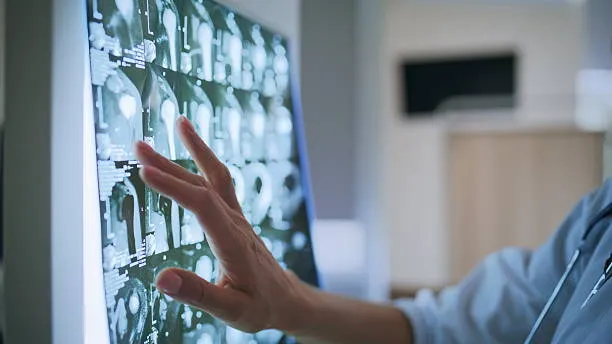
Selecting the correct monitor requires balancing your clinical needs, environmental hazards, and project budget. Evaluate your specific use case against these core criteria:
- Identify your clinical risk level: Will doctors use the screen to interpret medical imagery? Or will staff simply access electronic health records? Diagnostic tasks require strict DICOM calibration, while your administrative tasks prioritize continuous reliability and durability.
- Assess your physical environment: Healthcare displays constantly face spills, تراب, and harsh cleaning chemicals. Look for monitors with high IP ratings (مثل IP65 water and dust resistance) if you are deploying them in emergency rooms or high-traffic public lobbies.
- Evaluate your touch interface requirements: For interactive applications like patient self-service kiosks or nursing stations, your touchscreen must respond accurately. Ensure the touch technology performs reliably even when your users are wearing medical gloves or when the screen surface is wet.
- Verify your regulatory compliance: Always check your local and international hospital regulations. If you mount the monitor near a patient bed or connect it to medical machinery, IEC 60601-1 electrical certification is usually a mandatory requirement to prevent dangerous interference.
Partnering with a Reliable Display Manufacturer
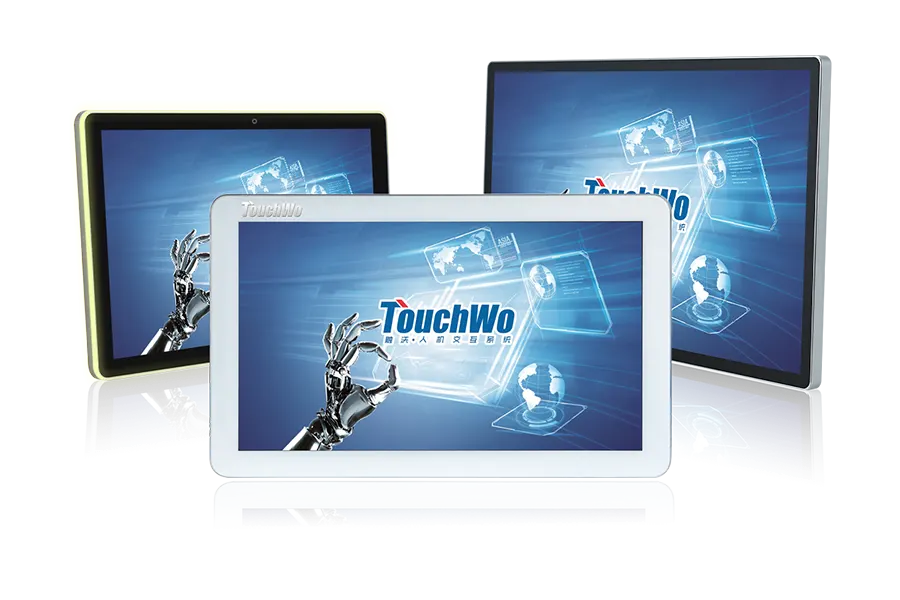
You do not always need the most expensive diagnostic screen on the market, but you absolutely need hardware built specifically for your clinical environment. For high-traffic hospital lobbies, patient check-in areas, and nursing stations, your best move is working directly with a specialized touch solution manufacturer.
TouchWo delivers highly customizable, IP-rated touch displays and fully integrated self-service kiosks. They are explicitly designed to handle the heavy public use, constant cleaning, and continuous operation required in modern medical facilities.
Are you upgrading the patient check-in experience or equipping your healthcare facility with reliable self-service terminals? اتصل بنا اليوم to discuss your project requirements and get a custom quote on our interactive kiosk solutions.