Léim ar ábhar

Quality inspection turns a touch screen specification into measurable results. A complete program checks display performance, cruinneas dteagmháil, sábháilteacht leictreach, hardware interfaces, comhoiriúnacht córas oibriúcháin, agus iontaofacht fhadtéarmach. It also provides records to show that each test has been completed. Buyers comparing monatóireacht ar scáileán tadhaill should look beyond product claims and check how manufacturers verify quality before shipment. This guide covers the main inspection stages and the records buyers should request when evaluating a supplier.
Siopaí Bealaí Eochair
- TouchWo’s quality control process includes functional, leictreach, comhshaoil, and aging tests before shipment.
- Display panels should pass component-level checks for brightness, dath, and pixel defects before further assembly.
- Interface and compatibility tests should cover every specified port, peripheral, and operating system configuration.
- Inspection records linked to serial numbers help buyers trace test results and handle quality issues after delivery.
Why Quality Inspection Matters for Touch Screen Projects
A touch screen monitor is often part of a larger system, such as a self-service kiosk, medical cart, or industrial control cabinet. If the display fails, the whole system may stop working. Some problems are not visible during a basic power-on check. Weak solder joints may fail under vibration, while poor bonding may cause touch problems after exposure to heat or humidity.
Finding these issues during production is less costly than repairing equipment at a customer site. Factory rework takes time, but field failures can lead to shipping costs, service visits, and unexpected downtime.
Inspection also sets clear expectations between buyers and manufacturers. Both sides should agree on test methods, acceptance limits, and reporting requirements before mass production. These details also support the warranty and after-sales process by providing evidence when a product issue needs review.
Which Display and Electrical Tests Should Be Included?
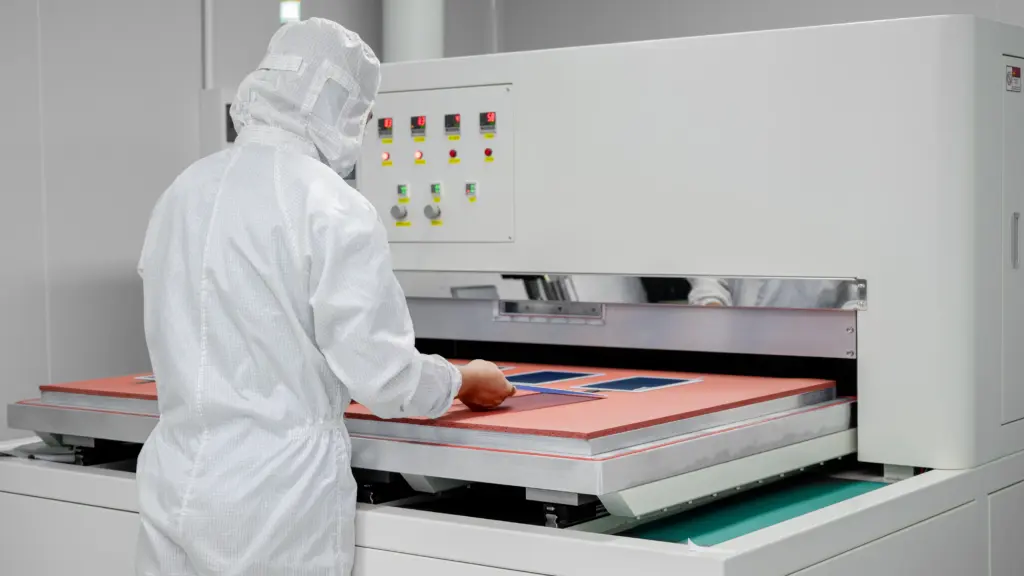
Display testing checks whether the panel meets its agreed specifications before further assembly. Brightness and uniformity tests measure light output across the active area. Color checks confirm that the image stays within the required range. Visual inspection also identifies dead pixels, line defects, and mura.
Electrical checks should take place before the product moves to the next assembly stage. DC testing checks power stability, while a withstand voltage test checks the insulation and electrical safety of the power path.
Use calibrated equipment and agreed acceptance limits rather than comparing one panel with another by eye. Checking panels early also prevents defective components from moving into later production stages.
How to Test Touch Accuracy and Responsiveness
Touch testing checks whether the screen responds correctly to real user input. Responsiveness measures how quickly the screen registers a touch, while accuracy checks whether the reported position matches the actual contact point.
Linearity testing should cover the full active area, including edges and corners. Multi-touch testing confirms that the screen can recognize the number of simultaneous contact points stated in the specification.
The test method should also match the intended application:
- Stylus input: Use the stylus type specified for the project and check its response across the screen.
- Oibriú lámhainní: Test with the gloves operators will use in the working environment.
- Wet or humid conditions: Check touch behavior when moisture is part of normal operation.
- Fast gestures: Test swipes and continuous movement, not only single taps.
Touch controllers may need different settings for different working conditions. Buyers should confirm that the tested configuration matches the final product rather than relying on a basic finger-touch demonstration. TouchWo also describes its touch screen testing and R&D capabilities for buyers who need more information about product validation.

Which Interfaces and OS Functions Need Validation?
Hardware and software compatibility should be checked together. Every port listed in the product specification needs a functional test. Depending on the configuration, this may include USB, RS232, HDMI, Port Taispeána, LAN, agus naisc fuaime.
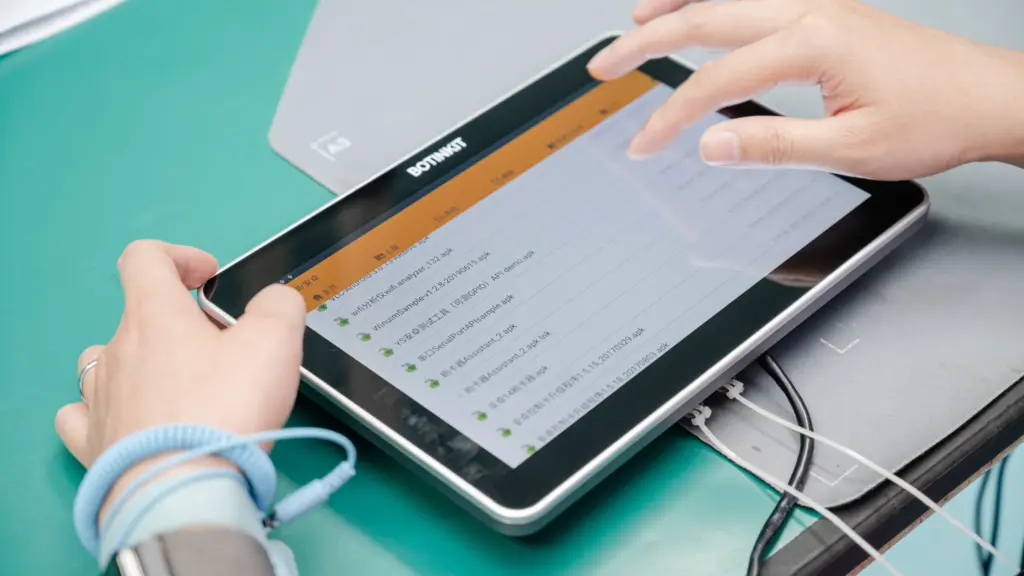
Peripheral testing should use the actual devices ordered for the project. Printers, scanóirí, Léitheoirí NFC, and cameras may work differently in a complete system than they do in a simple port test.
Operating system checks are equally important. For Android and Windows models, manufacturers should verify:
- System startup and boot behavior.
- Touch function and driver installation.
- Preinstalled applications and required software.
- Sleep and wake functions.
- Each operating system version included in the order.
Mar shampla, a monitor that works with one Windows configuration may need different driver checks under another system. Buyers evaluating industrial touch screen PCs should confirm that the tested hardware, córas oibriúcháin, and peripherals match the final order.
Cables and connectors also need attention. Test the assembled connection and use the torque values stated in the product instructions. This helps identify loose connections and installation problems before delivery.

Which Reliability Tests Check Long-Term Performance?
Reliability tests expose products to conditions that may cause problems during transport or daily operation. The test plan should reflect the temperature, taise, creathadh, and electrical conditions expected at the installation site.
| Tástáil | What It Checks |
|---|---|
| High and low temperature | Component operation outside normal room conditions |
| Temperature and humidity | Bonding, séalaithe, and material stability |
| Creathadh | Loose connectors and solder joint weakness |
| Drop | Product and packaging resistance to impact |
| ESD | Resistance to electrostatic discharge |
| RF & EMC | Electromagnetic interference and emissions |
| 48-hour aging | Early failures during continuous operation |
Need the Test List in Writing?
TouchWo runs touch, DC, withstand voltage, high and low temperature, taise, creathadh, drop, ESD, RF & EMC, and 48-hour aging on 100% of units. Request the outbound test list and a sample inspection record with your quotation.
100% Outbound Testing | 48-Hour Aging | Records per Serial
Request the Test List →What Reliability and Aging Tests Should Buyers Look For?
Reliability testing compresses years of service stress into days. The tests that matter, and what each one catches, form the core of an acceptance conversation with a supplier.
| Tástáil | What it catches |
|---|---|
| High and low temperature operation | Components marginal outside comfort range |
| Constant temperature and humidity | Bonding and sealing weaknesses over time |
| Creathadh | Loose connectors, solder fatigue at industrial sites |
| Drop | Packaging and structural survival of transport |
| ESD (urscaoileadh leictreastatach) | Touch controller and port immunity to static |
| RF and EMC | Interference immunity and emission compliance |
| 48-hour aging | Early-life failures burned out before shipping |
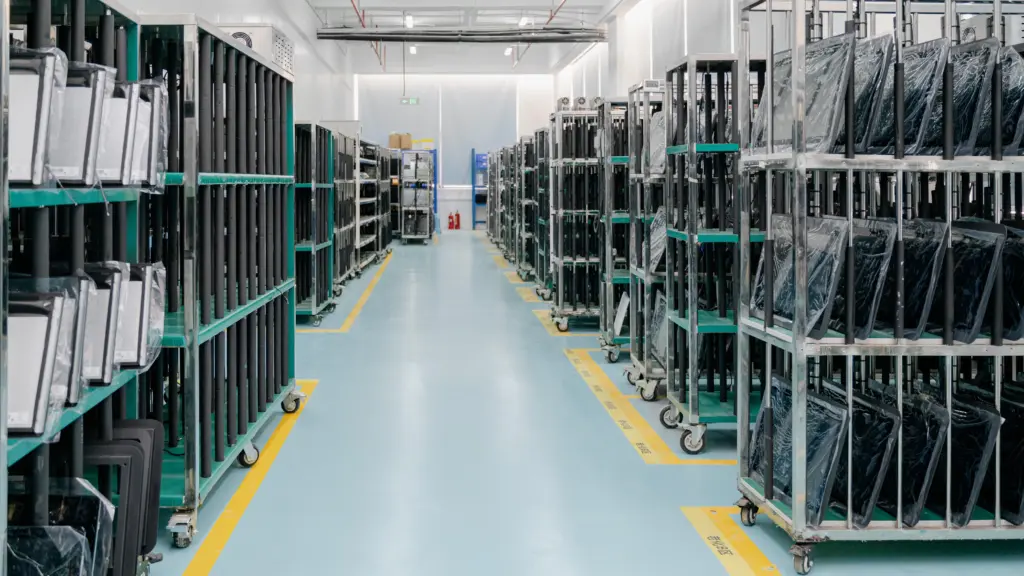
Aging is particularly useful because some component problems only appear after continuous operation. A 48-hour aging test helps identify early failures before products are packed and shipped.
TouchWo states that its outbound quality program covers touch, DC, withstand voltage, high and low temperature, taise, creathadh, drop, ESD, RF & EMC, and 48-hour aging on 100% of units. Buyers should still confirm the test scope and acceptance conditions for their specific configuration.
Sampling also has a role in quality control. AQL-based inspection can be used for selected incoming or batch checks, while other tests may be required on every unit. The quotation should clearly state which stages use full inspection and which use sampling.

Aging deserves specific attention. The first days of powered operation are when infant failures surface, and a 48-hour burn-in on every unit removes most of them before packing. TouchWo runs this full sequence on 100% of units: touch, DC, withstand voltage, high and low temperature, constant humidity, creathadh, drop, ESD, RF & EMC, and 48-hour aging. The test list is confirmed for external reference. Management-system certification such as the ISO 9001 quality management standard covers the factory processes behind those tests.
Sampling has a place in incoming inspection, where acceptance quality limit (AQL) rules govern how many units to check per lot. Reliability and aging, i gcodarsnacht, earn their keep on every unit, because infant failures scatter across a production run without pattern. A supplier can sample some stages and test others; the quotation should state which is which.
Environmental ranges deserve attention too. A unit specified for constant humidity testing is validated for the chamber conditions the deployment will resemble, not for a generic industrial profile. Buyers running cold chains or coastal sites should name those conditions in the acceptance criteria.
What Quality Records Should a Touch Screen Supplier Provide?
Test results are useful only when buyers can identify which product they belong to. Sula gcuirtear ordú, request the following documents:
- Outbound inspection records: Test items, torthaí, and pass/fail status linked to serial numbers.
- Aging logs: Evidence that each required unit completed the specified aging period.
- Deimhnithe táirge: Applicable documents such as CE, CCFG, RoHS, CCC, or PSE, based on the destination market. Féach ar ár n-alt ar touch screen certifications by market.
- Factory management certificates: Documents such as ISO 9001 that cover the quality management system.
- Sample inspection reports: An example provided with the quotation to show how results are recorded.
A useful inspection record should include the serial number, test item, test conditions or set value, measured result, pass/fail status, and inspection station or tester. These details help buyers review product quality and trace issues after delivery.
It is also important to separate product certificates from factory certificates. Product certificates relate to the product and applicable compliance requirements. Management certificates relate to the factory’s operating processes. Buyers should check both where the project requires them.

Why Work With TouchWo on Quality-Controlled Displays?
Quality control should be part of the manufacturing process, not just a final visual check. TouchWo combines product development, hardware testing, software compatibility checks, and pre-shipment inspection to support touch screen projects.
Our R&D and testing capabilities cover display function, feidhmíocht dteagmháil, sábháilteacht leictreach, coinníollacha comhshaoil, agus ag dul in aois. The outbound sequence also includes the 48-hour aging test described above. Buyers can review the TouchWo touch screen monitor range and discuss the test requirements, timpeallacht oibriúcháin, comhéadain, and system configuration for their projects.
Roimh olltáirgeadh, confirm the required tests and acceptance criteria with your supplier. A clear inspection plan helps both sides work toward the same quality target and supports more reliable long-term cooperation.
Ceisteanna Coitianta
What Does 100% Testing Mean for Touch Screen Monitors?
It means every unit goes through the specified inspection sequence rather than relying only on sample checks. Ask the supplier for the test list and records to confirm which checks are completed on every unit.
Which Tests Matter Most for a Self-Service Kiosk?
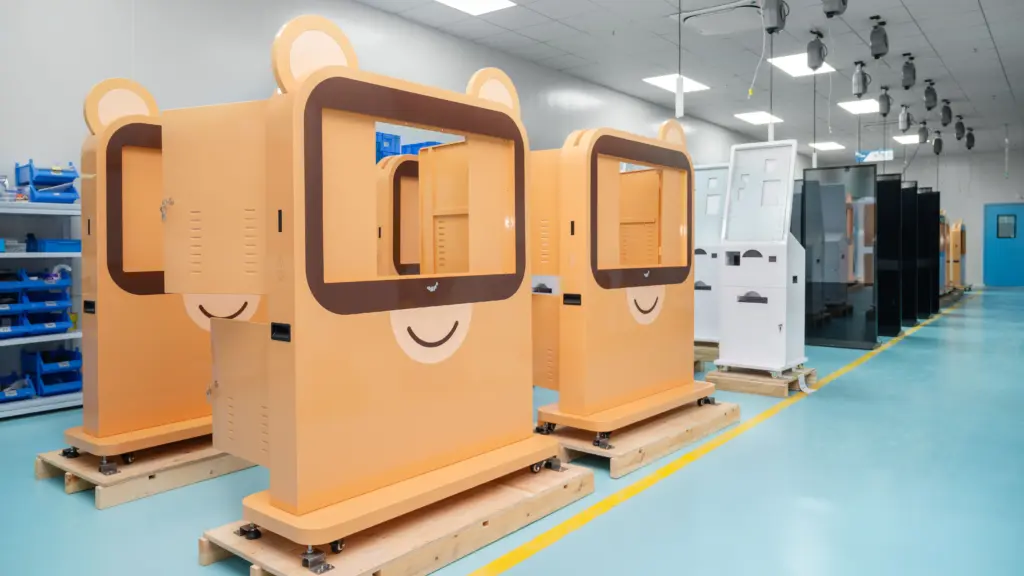
Cruinneas dteagmháil, glove or wet-touch performance, ESD resistance, creathadh, drop, and aging tests are important for public-use kiosks. The final test plan should also match the kiosk’s location and daily operating conditions.
Can Buyers Request Additional Acceptance Tests?
Tá. Buyers can agree on additional tests based on the application and operating environment. Define the test methods and acceptance limits before sampling so the supplier can assess the requirements, am, and cost in advance.
What Is the Difference Between Product and Factory Certificates?
Deimhnithe táirge, mar CE, CCFG, agus RoHS, relate to product compliance with applicable requirements. Factory management certificates, mar ISO 9001, cover the quality management processes used by the manufacturer. Buyers should check which documents apply to their products and destination markets.
How Do Inspection Records Help After Delivery?
Serial-number-based records help buyers identify the affected unit, review its test history, and provide clear evidence when reporting a quality issue. They also support warranty reviews and spare-part matching.