
A catalog display and a bespoke display solve the same interface problem by different routes. One arrives with dozens of decisions already made and paid for. The other starts as a drawing and carries your constraints through every layer of the build. Choosing between a standard unit and a custom touch screen design is a procurement decision, not a preference.
This guide sets out where the two routes divide, what each one costs in money and calendar, and what you inherit after the first shipment. It is written for buyers comparing catalog hardware against a custom touch screen build for a deployment that must keep working for years. Every figure quoted here points at a page on this site you can open yourself.
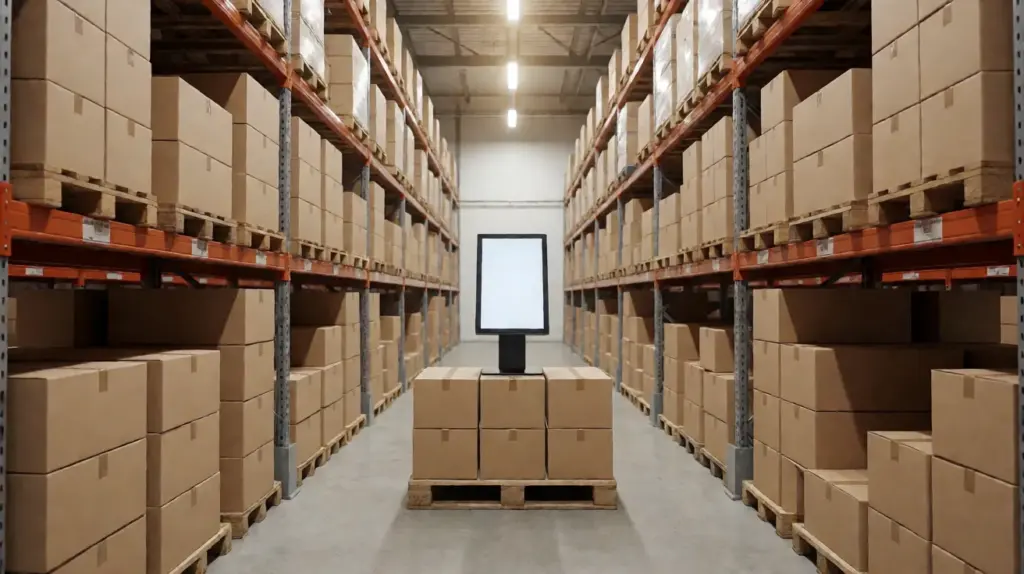
A standard product sells you decisions someone already made. A custom build sells you the decisions themselves, and the bill for making them.
Where the Two Routes Divide
The divide sits at the bill of materials, not at the paint. A catalog unit ships a panel, a controller, a housing, and a power supply that already work together. Change the bezel color and the item stays standard. Change the cover glass thickness and the touch stack, the frame, and the test plan move with it.
Modification depth is the line most buyers misread. Printing your logo on a catalog housing is branding, and that route has its own guide to white label touch monitors on this site. Replacing the glass with a different thickness changes the lamination, the sealing, and the qualification file. The second case is custom work even when the panel stays the same.
Factories price these situations differently because the risk differs. A catalog item can be built again next month at the same cost. A custom item ties tooling, qualification, and spares to one customer name. That lock-in is what you pay for, and it is also what you inherit.
The table below lists the dimensions where the two routes part company. Each row names the decision you make, the change the factory absorbs, and the line item that moves. Read it before comparing any quotation, because two prices for one product description rarely mean the same object.
| Dimenzija | Standard route | Custom route |
|---|---|---|
| Upfront work | Already paid for by the factory | Sketch, structural design, prototype, then product |
| Alati | Shared across every buyer of that model | Yours alone when a mold or frame is new |
| Order floor | Single units accepted on catalog models | Fully custom modules carry a stated unit floor |
| Calendar | Days to dispatch for in-stock models | Weeks of engineering before the first unit |
| Certifikacija | Reports already name the model | Reports may reopen for a new configuration |
| Spares | Interchangeable with the same catalog line | Tied to your drawing revision |
| Change risk | Nizak, since substitutes exist | visoko, since the specification names you |
What a Standard Product Covers
Catalog hardware exists because most installations need the same thing. Sizes cluster around a few familiar diagonals, and this site lists its range as five to one hundred ten inches across twenty-six sizes. Sučelja, mount patterns, and power inputs repeat across models. A buyer picks from a list instead of writing one.
Speed is the real product. The manufacturer pages here state that in-stock standard models dispatch within two to five days, while custom goods run approximately two weeks or two months. That gap explains why pilots start standard. A working screen in the field buys time for a slower decision.

Documentation travels with catalog units. A model qualified once carries that qualification to every buyer, and its figures sit in a datasheet. Custom work reopens parts of the same file, i market-by-market certification guide lists which scopes depend on physical choices. Ask which certificate names your exact configuration before assuming coverage.
The limits are structural rather than cosmetic. Svjetlina, brtvljenje, temperature range, and port set are fixed by the model you select. When a site needs something outside those figures, the catalog cannot be bent far enough to reach it. That boundary is honest, and pretending otherwise costs weeks later.
When Custom Design Earns Its Cost
Custom work pays when the environment causes the failure rather than the feature list. Outdoor units need brightness and glare treatment. Washdown areas need sealing. Cold bays need components rated for that start, and the site’s guide to IP65 rated touch monitors covers the ingress argument.
Mechanical fit is the second trigger. A cutout that already exists in your machine forces geometry no catalog item matches. So does a profile that cannot grow, or a bolt pattern shared with other hardware. Structural drawings then lead the build instead of following it. The customization page describes that path as sketch, structural design, prototype production, and finished product.
Touch behavior is the third trigger. Rad rukavicama, wet hands, sensing through thick glass, and anti-glare surfaces each change the stack and the controller setup. The OEM/ODM process guide here gives two to four millimeters as the usual cover glass range. It also notes the controller must drive a signal through that thickness.
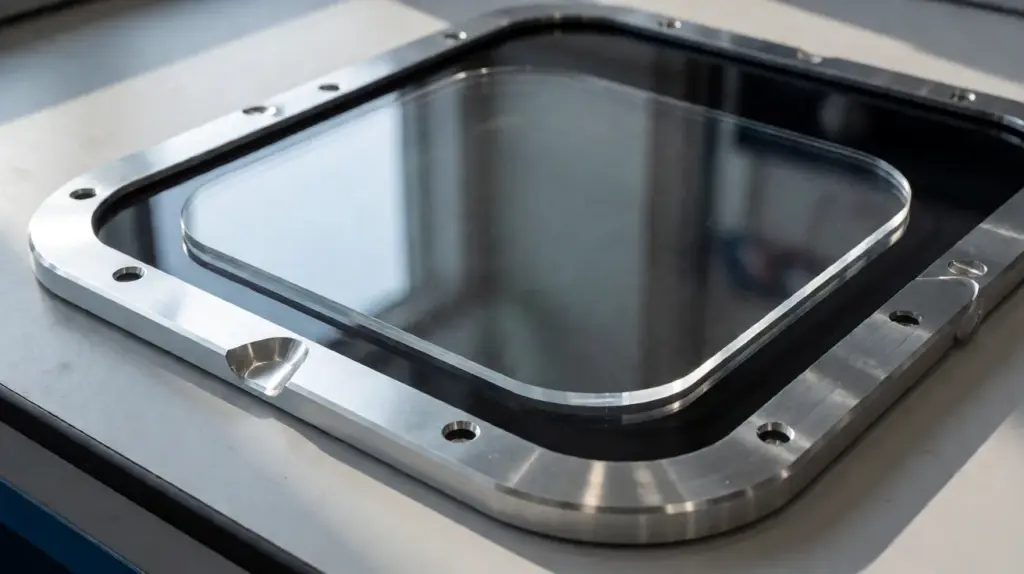
Crossing this line costs more than money. A custom build creates a specification you must maintain, a supplier record you must keep, and a change history you must read. If a program runs three years, that paperwork earns its place. If it ends in six months, buy the catalog unit and spend the difference elsewhere.
How Volume Shapes the Choice
Volume decides whether custom economics close. The process guide states that custom touch sensors and cover glass often require no formal minimum order. It gives the same for modular monitors, then sets a three hundred unit floor for fully custom LCD and touch modules. Those three lines describe three different routes.
Low volume plus a custom specification is where buyers overpay. Tooling and qualification spread across few units, so each screen carries work it never consumed. A pilot of ten units rarely justifies new glass. A rollout of two thousand usually does, and the difference is visible in the unit line rather than the headline price.
Order floors differ across this site’s own pages, so read each figure as a stated limit rather than a rule. The support page answers that one piece is accepted, while the process guide sets three hundred units for a fully custom module. Both statements hold at their own scope. Ask which scope your request falls into before comparing prices, i one-piece MOQ guide explains how the two figures coexist.
Forecast honestly in the request itself. A pilot quantity, an annual estimate, and a reorder rhythm let a supplier recommend a platform you can grow into. A bare number with no context invites a quote built for one order and nothing after it. Volume is also the cheapest line to add, since estimating it costs nothing.
Volume is the only input you can change for free, and it is the one that moves both routes.
What Changes Cost and Lead Time
The cost structure of a custom build is documented elsewhere here. The guide to custom touchscreen OEM pricing splits it into non-recurring engineering, tooling, and unit price. Read that file before negotiating. This section covers only what moves when you cross between the two routes.
Lead time moves the most. The process guide states that ODM work runs four to eight weeks. Fully custom OEM work takes eight to sixteen weeks, inside a lifecycle of three to six months. A standard unit skips most of that calendar because the design work is finished and paid for. What remains is qualification, burn-in, and packing, and the testing guide on this site shows what a factory runs before shipping.

Change orders cost more on a custom touch screen build. Every revision reopens drawings, tooling, and the test plan. A change to a standard unit usually means a different model number and a fresh availability check. That asymmetry is why the specification should settle before the order rather than during it.
Freight and delivery terms sit behind both routes with equal weight. A trade term names where the quoted price stops and where your costs begin. Section 2-319 of the Uniform Commercial Code sets out what an FOB term obliges each side to do. Ask for a named place rather than a bare three-letter code. The same question decides whether a customs broker is a supplier service or your own hire.
How TouchWo Splits the Two Routes
The published structure here separates the two paths cleanly. Catalog hardware sits in the industrial touch screen monitor range and the kiosk category, each with model level figures you can read. Custom work runs through the service page, which lists ten dimensions a buyer can change and eight steps from requirement to bill of materials.
The About page describes five in-house supply chains, a class 100 dust-free lamination room, and glass-to-glass and glass-to-film bonding. Those matter for the custom route, since lamination quality is where a modified stack fails first. A quality management standard such as ISO 9001 describes managed processes rather than product approval. That is why an audit report is read for scope, not for a pass mark, i BSI overview of ISO 9001 states the distinction plainly.
Support obligations differ by route as well. The support page states that inquiries receive replies within seven hours and lists 455 days of free spare parts replacement. Its warranty line starts at fifteen months and can extend to two or three years. For a catalog unit, spares stay interchangeable with the same model line. For a custom unit, the drawing revision is the spare part, i warranty and after-sales guide explains how to keep that revision traceable.
Both routes end at the same inquiry form, i TouchWo answers either request. What differs is what you attach to it. A standard request needs a model number and a quantity. A custom request needs the environment, the drawing, the volume forecast, and the acceptance criteria, i supply chain guide shows where each obligation transfers.
Često postavljana pitanja
Is a standard product always cheaper than a custom touch screen build?
At low volume, usually yes, because engineering and tooling are already paid for. At high volume a custom build can beat a catalog unit on unit price, since the fixed work spreads across many screens. Compare both routes at your own quantity rather than at a list price.
Can I start with a catalog unit and move to custom later?
Many programs do exactly that, and it is a sound sequence. The pilot proves the workflow while the field data defines the specification. Plan the switch early, since a custom route carries engineering weeks that a catalog order does not.
What is the smallest change that makes a build custom?
Anything that alters the stack or the structure counts, such as a different cover glass thickness, a new sealing class, or a modified cutout. Logo printing and cable length do not. The practical test is whether the factory must reopen drawings to answer your request.
How do I compare two quotes from different routes?
Put both on one sheet and list what each price includes. Compare panel grade, svjetlost, touch stack, brtvljenje, power input range, warranty term, and the named trade term with its place. Ask each supplier to name the assumptions behind any blank line.
Does a custom route change the certification burden?
It can, because a report usually names one configuration rather than a family. Changing the power supply, the enclosure, or the glass may reopen electrical safety and emissions work. Confirm which certificates cover your exact build before the first shipment, not after it.
Završne misli
The routes differ by who owns the decisions, and a custom touch screen build hands you both the control and the maintenance that comes with it. A catalog unit hands you a shorter calendar and a lower fixed cost. Neither answer is safe by default, since each one simply moves the risk somewhere else.
Price the two against your own quantity, okruženje, and service window. Ask each supplier to state the assumptions behind a blank line, and keep the drawing revision with the purchase record. That file is what protects a deployment years later.
Buyers who treat the route choice as a procurement decision rather than a product preference rarely regret it. The regret arrives later, when a spare part cannot be ordered because no one kept the revision number that defines a custom touch screen build. Write the brief as if the unit must be rebuilt five years out, because that is the test a long deployment applies to it.