تخطى الى المحتوى

In-house manufacturing brings key touchscreen production stages under one company or group. These stages may include touch panel bonding, glass processing, metal fabrication, حَشد, والاختبار. This setup can improve quality control by reducing supplier handoffs and making production problems easier to trace and correct. For buyers comparing a الشركة المصنعة لشاشة اللمس with an assembly-only supplier, understanding these differences helps assess product consistency, quality records, and long-term supply reliability.
Key Takeaways
- In-house production reduces handoff-related variation and shortens correction time, but it does not eliminate defects.
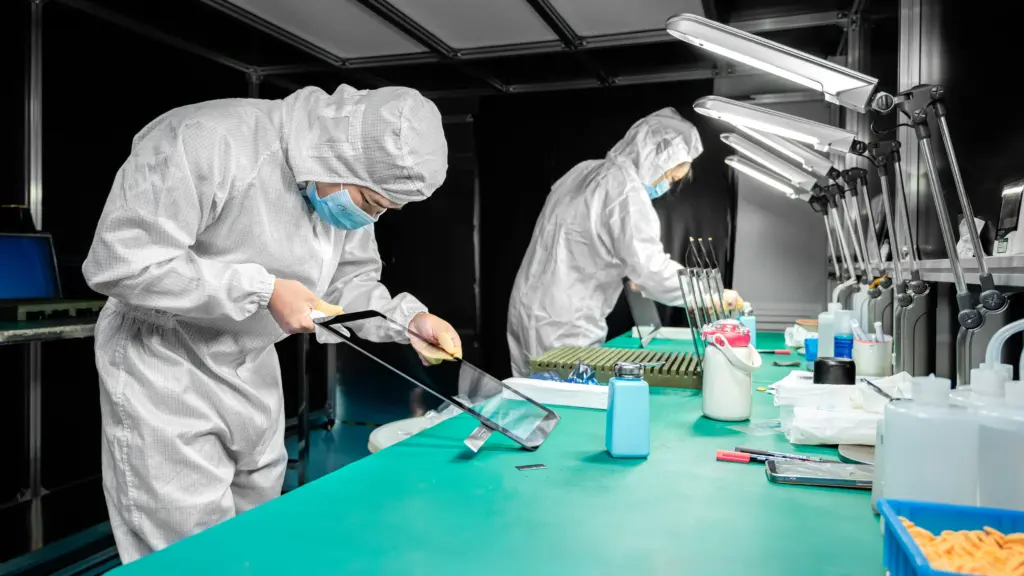
- TouchWo’s group companies cover key production stages: DKTouch panel manufacturing with a Class 100 cleanroom, CHUWEI sheet metal processing, HONGLV aluminum machining, وأكثر من 11 assembly lines.
- Every unit completes the full outbound test sequence and 48 hours of aging before packing.
- Serial number and revision tracking help buyers identify affected units and manage repairs in bulk orders.
What Does In-House Touchscreen Manufacturing Include?
In-house manufacturing means a company manages several key production stages within its own facilities or group. For touchscreens, these stages can include panel bonding, cover glass processing, تصنيع الصفائح المعدنية, تصنيع الألمنيوم, final assembly, والاختبار.
| Production Stage | Main Work | Quality Control Benefit |
|---|---|---|
| Touch panel bonding | Sensor-to-glass lamination | Direct control of bonding and rework |
| Cover glass processing | Cutting, طلاء, and printing | Faster design and process adjustments |
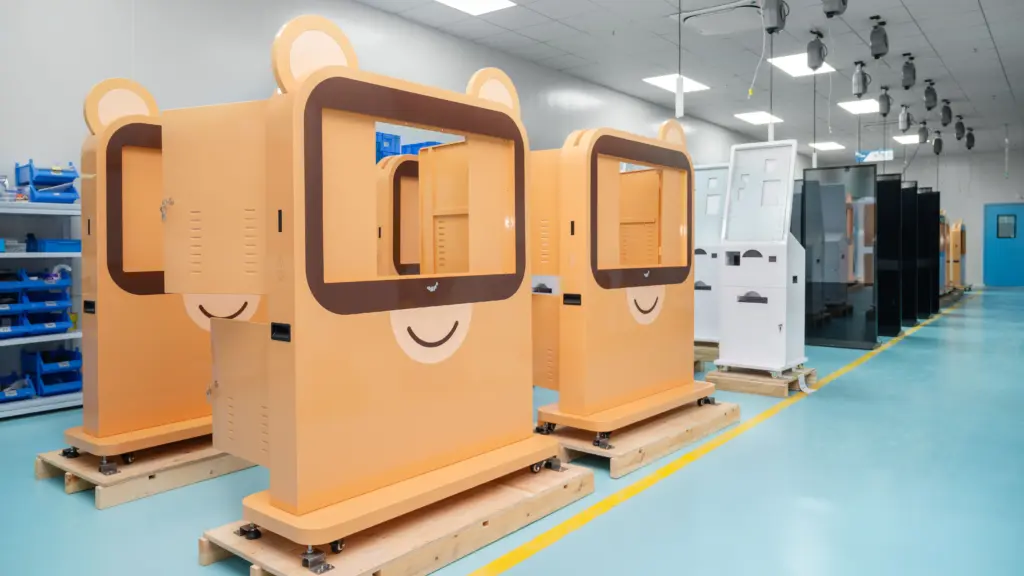
| Sheet metal fabrication | العبوات, بين قوسين, and housings | Better control of fit and dimensions |
| Aluminum machining | Frames and precision bezels | Closer control of component tolerances |
| Assembly and testing | Unit assembly, تقتيش, and aging | More consistent inspection records |
In-house production does not mean a factory makes every component. Display panels, ذاكرة, and power components usually come from specialist suppliers. The key difference is how many production stages one company controls and how it manages problems between them.
Buyers can learn more about these production stages in our article on the touch hardware supply chain.
How In-House Production Improves Touchscreen Consistency
Product consistency depends on stable materials, clear specifications, and controlled production processes. When panel bonding and enclosure fabrication are managed within one organization, engineering teams can work from the same drawings and quality requirements.
على سبيل المثال, if an assembled touchscreen has an uneven bezel gap, the assembly team can work directly with the metal processing team to check dimensions and adjust the fixture. When metal fabrication is outsourced, the same issue may require additional communication, supplier approval, and another production cycle.
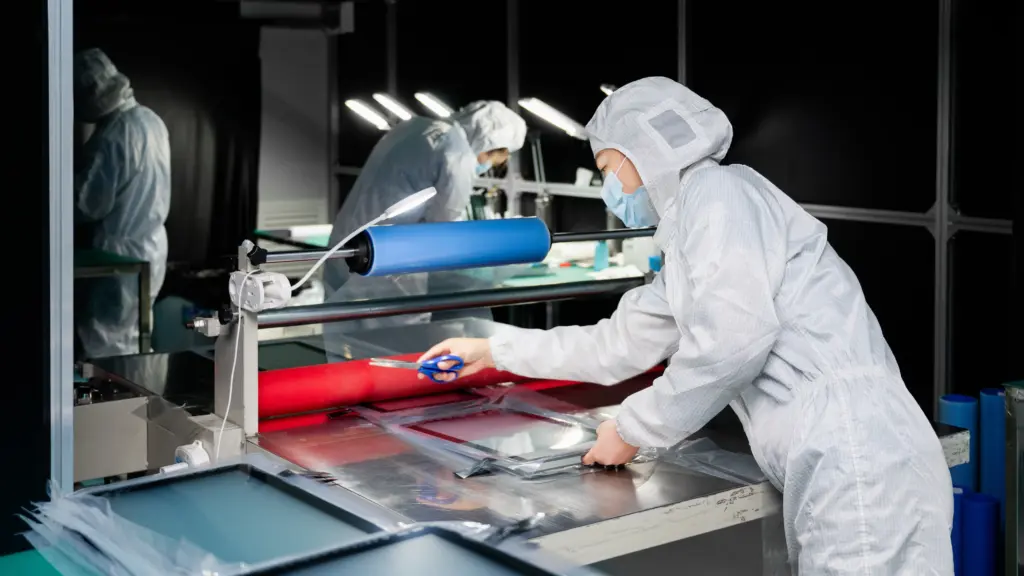
Panel bonding also benefits from direct process control. تراب, poor alignment, or uneven bonding pressure can affect the finished display. A manufacturer that controls its bonding environment can investigate these issues and arrange rework without waiting for an outside supplier.
لكن, integration does not guarantee perfect products. It reduces variation and shortens correction time, while actual quality still depends on process control, staff training, and inspection standards.
عند المقارنة شاشات تعمل باللمس, buyers should therefore ask for inspection records from actual production runs rather than relying only on a manufacturer’s quality claims.
How Touchscreen Manufacturers Control Production Quality
Quality control should cover the entire production process, from incoming materials to final shipment. Each stage needs clear inspection requirements and records so that defects can be identified before they reach the customer.
في TouchWo, key production stages are managed across its group manufacturing structure. Every finished unit completes the outbound test sequence, covering electrical safety, أداء اللمس, environmental checks, البيئة والتنمية المستدامة (electrostatic discharge), and RF & إي إم سي (التوافق الكهرومغناطيسي) تَحَقّق. A further 48 hours of aging is completed before packing.
The main inspection stages include:
1. Incoming Material Inspection
Check panel grades against purchase specifications, circuit board revisions against the bill of materials, and metal parts against dimensional drawings. Early checks prevent unsuitable materials from entering production.
2. In-Process Quality Control
During bonding and assembly, inspect cleanliness, alignment, fastening torque, connector seating, and firmware versions. These records help identify where a problem started.
3. Final Testing and Aging
Finished units undergo functional and safety checks, environmental testing, and aging. Units must pass the required tests before packing.
For more details, see our article on pre-shipment testing for industrial touch screen monitors.

Why Traceability Matters for Bulk Touchscreen Orders
For bulk touchscreen orders, buyers need to know whether every unit follows the same approved specifications. Traceability connects each product’s serial number to its hardware revision, firmware version, component batches, and production records.
When a problem appears after delivery, this information helps service teams identify which units may be affected. Without revision tracking, buyers may need to inspect or replace a much larger group of devices than necessary.
A practical traceability process should allow a service team to:
- Identify a unit’s hardware and firmware revisions from its serial number.
- Find the component batches used in that production run.
- Check whether the issue affects other units from the same batch.
- Confirm which replacement parts are compatible.
Buyers should also ask how the manufacturer records engineering changes and informs customers before a component or process is updated. Our article on engineering change management for industrial displays explains why revision control matters for long-term projects.
Evaluating a Touch Screen Manufacturer?
TouchWo integrates panel bonding (DKTouch, فصل 100 cleanroom), الصفائح المعدنية (CHUWEI), تصنيع الألمنيوم (HONGLV), و 11+ assembly lines under one group. Request a factory walk-through and serial-level test records with your quotation.
فصل 100 Cleanroom | 11+ Assembly Lines | Serial Traceability
Arrange a Factory Visit →What to Check When Evaluating a Touchscreen Manufacturer
In-house production is valuable only when the manufacturer can show that its facilities, processes, and records support consistent output. Before placing a bulk order, buyers and system integrators should check the following:
| What to Check | الأدلة على الطلب |
|---|---|
| Bonding environment | Cleanroom classification and facility details |
| Metal fabrication | Equipment list and sample dimensions |
| Production capacity | Assembly line count and current capacity |
| Quality testing | Test procedures and sample inspection records |
| Traceability | A sample serial number tracking record |
| Change management | Written revision and customer notification procedures |
| Production reliability | Factory visit or live production walk-through |
The quotation also deserves attention. Ask which processes are handled internally and which depend on outside suppliers. This helps explain differences in tooling charges, engineering costs, and lead times when product changes are needed.
A live factory visit can provide further evidence. Follow one unit from incoming inspection through assembly and final testing. Check whether the actual workflow matches the manufacturer’s stated capabilities.
For a clearer view of how manufacturing arrangements affect project costs, see our custom touchscreen OEM pricing article.

Why Choose TouchWo for Integrated Touchscreen Production?
TouchWo coordinates key production stages through its group companies. DKTouch handles capacitive touch panel manufacturing in a Class 100 cleanroom, CHUWEI focuses on sheet metal fabrication, and HONGLV manages aluminum processing. More than 11 assembly lines support finished product assembly and testing.
This structure helps connect component production, mechanical processing, and final assembly under coordinated quality requirements. It also gives engineering and production teams a more direct way to address fit, الترابط, and assembly issues.
For buyers planning bulk orders or long-term touchscreen projects, the value is not simply the number of processes a factory owns. It is the ability to maintain clear specifications, provide inspection records, trace product revisions, and respond to production issues without unnecessary delays.
Before starting a project, share your product requirements, الكمية المستهدفة, and application environment with TouchWo. The team can review the required configuration and explain which production stages and quality checks apply to your order.

أسئلة مكررة
Does in-house manufacturing guarantee better quality?
لا, and no serious manufacturer should claim it does. Integration reduces handoff-driven variance and shortens correction loops, while quality itself still depends on process discipline and test depth.
Which process benefits most from being in-house?
Touch panel bonding. It is cleanliness-critical and tolerance-critical, and rework quality at this stage decides whether a unit lasts years or fails in months.
Is an integrated factory always cheaper?
Not on the first quotation. Integration shows up later, in fewer fit iterations, faster corrections, and fewer field failures, so its value appears after the quote rather than on it.
How can I verify in-house claims?
Ask which processes run at which legal entity, request a factory visit or a live video walk-through, and check whether test records carry serial-level traceability.
Can an assembler with good vendors match an integrated factory?
أحيانا. A disciplined assembler with long-term vendors performs well in stable production. The difference appears when something changes, and a design fix crosses company boundaries instead of a desk.