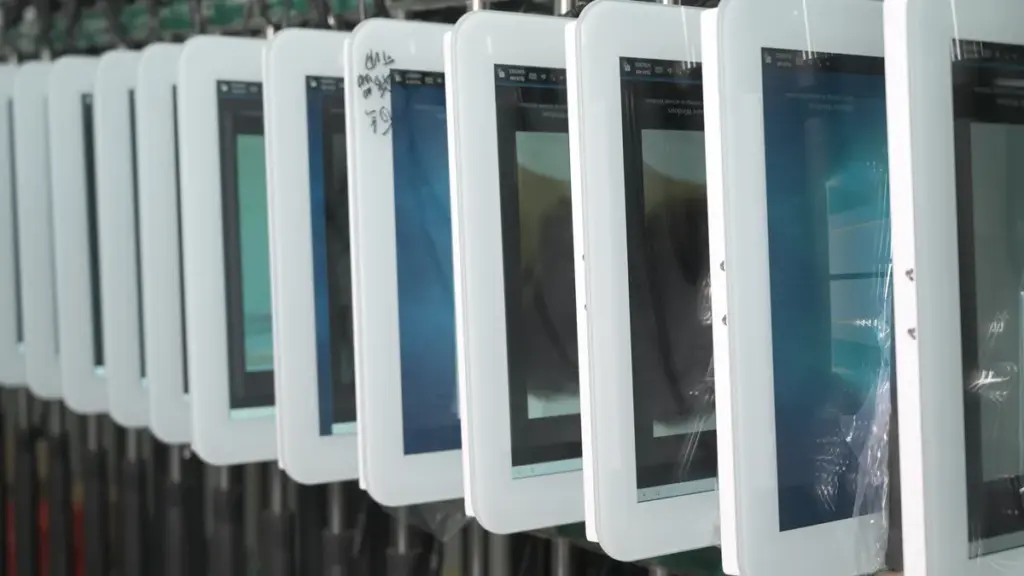
A white label touch monitor allows a business to sell an existing monitor under its own brand. The manufacturer keeps the original hardware design, while the buyer can customize visible brand details such as the logo, housing colour, boot screen, and packaging.
For equipment manufacturers, system integrators, and kiosk businesses, this approach offers a way to build a consistent product identity without developing a monitor from scratch. This guide explains the main branding options, the difference between white label and OEM services, and what to prepare before working with a supplier.
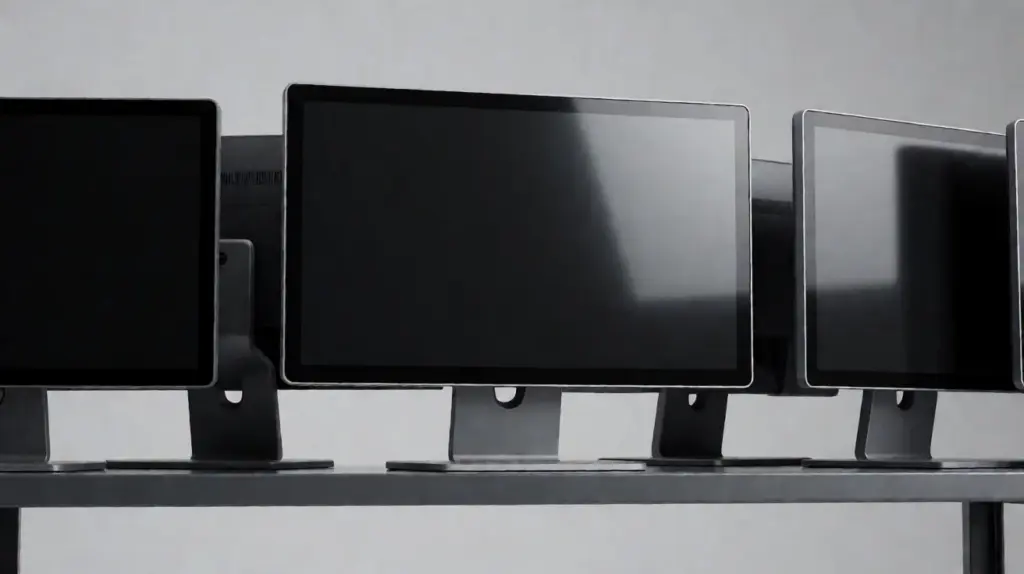
What Does a White Label Touch Monitor Include?
A white label touch monitor uses an existing product platform with your company’s branding. The manufacturer supplies the hardware, while you decide which brand elements should appear on the finished product.
The main goal is to create a product that fits your brand without making unnecessary changes to its original design.
Common white label options include:
- Housing: Custom colours and surface finishes.
- Logo: Your company name or logo on the bezel or housing.
- Software: Custom boot screens, device names, and interface graphics.
- Packaging: Branded cartons, manuals, and product labels.
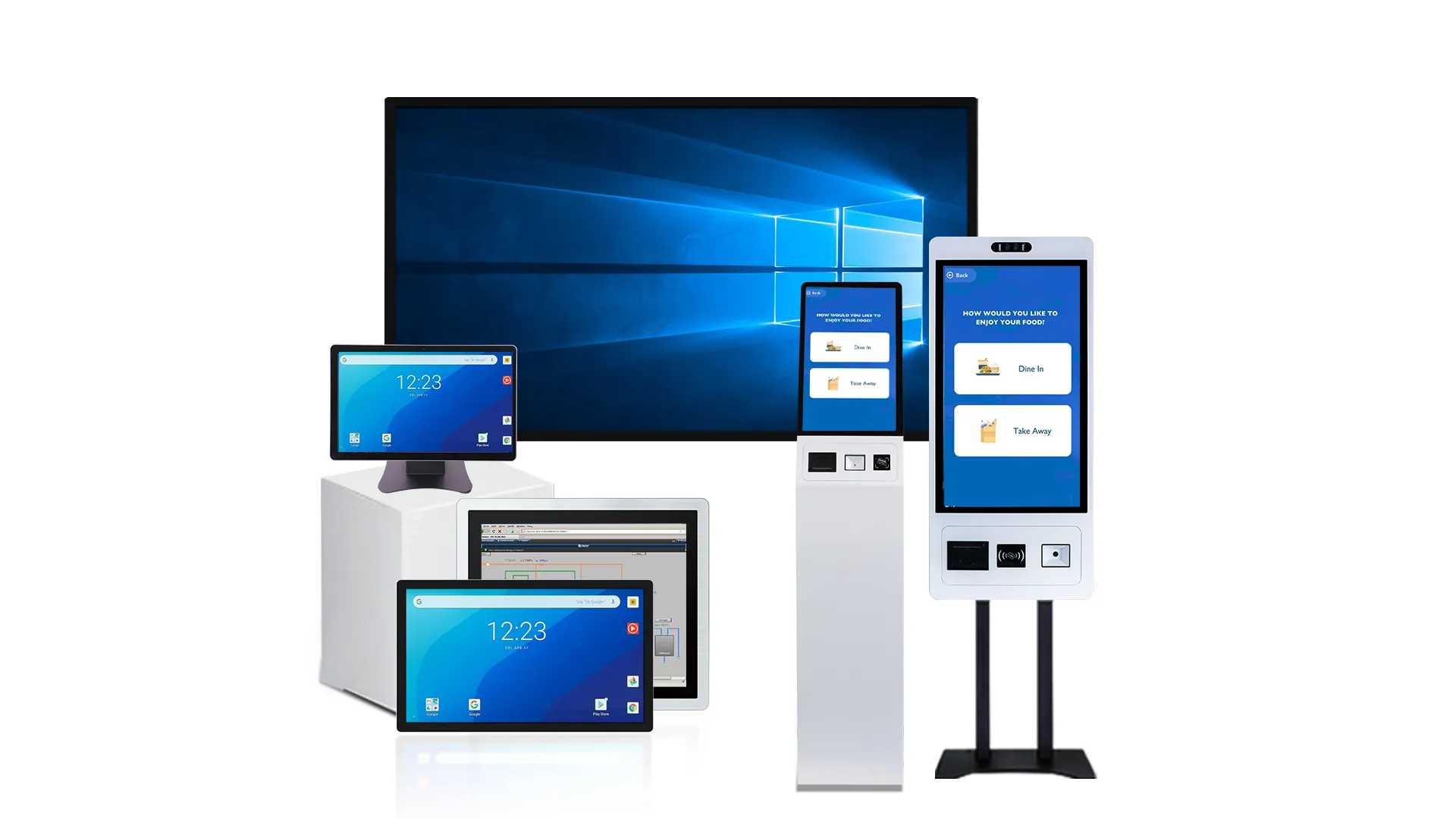
These options work for standard touch monitors, panel PCs, and kiosk displays. For example, a system integrator may need a branded monitor for an industrial control system, while a kiosk company may want its logo and startup screen to match the rest of its self-service equipment.
TouchWo provides touch monitor and kiosk solutions for different business applications, including industrial automation, healthcare, and self-service projects.
Which Parts of a Touch Monitor Can You Brand?
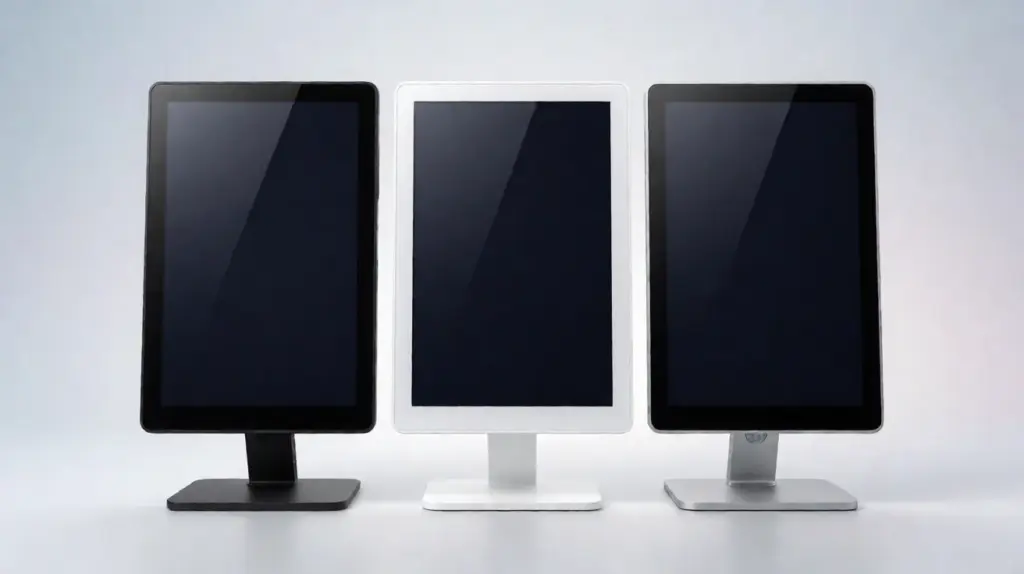
Housing colour and logo placement are usually the first changes buyers consider. They help customers recognize your brand without changing the monitor’s main hardware design.
TouchWo’s customization service covers colour, logo, appearance, configuration, interface, size, materials, and other product details.
Housing colour and finish
You can select a colour that matches your brand or product design. Before mass production, request a physical sample and confirm the finish. Keep the approved sample as a reference for future orders.
Logo placement and application
Common methods include silk-screen printing, laser engraving, and applied labels. Each method has different costs, durability, and appearance.
To avoid mistakes, provide:
- Vector logo artwork.
- A colour reference for the logo.
- A drawing showing the logo’s size and position.
- The required surface finish.
A clear drawing helps the factory place the logo correctly and maintain the same position across production batches.
How to Customize Boot Screens and System Branding
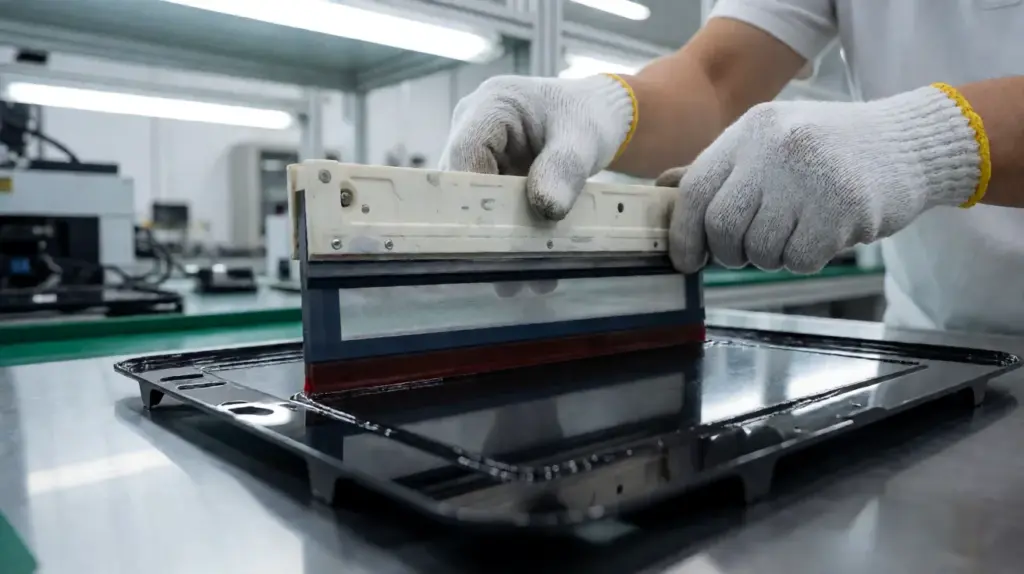
For touch monitors and panel PCs with an operating system, branding can also appear when the device starts or runs.
A monitor may have the correct logo on its housing but still show the manufacturer’s name on the boot screen or system interface. This can create an inconsistent brand experience for your customers.
Before production, confirm which software elements can be changed:
- Power-on logo or boot screen.
- Launcher or desktop background.
- Device name in system settings.
- About screen and preloaded applications.
Send the required graphic files and identify the operating system and software version. Also, list any manufacturer branding that must be removed.
Check these details on a sample unit before approving mass production. The sample should use the same software image planned for the actual order, not a temporary demonstration version.
TouchWo’s quality control process includes ten tests before delivery and a 48-hour powered functionality test before packing. For branded orders, buyers should also confirm that the approved software version is loaded during the final inspection.
How to Brand Packaging and Product Documents
Product packaging is another important part of a white label order. A branded monitor should arrive with packaging and documents that match the product itself.
Common options include:
- Printed outer cartons.
- Custom product labels.
- Branded manuals and quick-start guides.
- Printed inserts and accessories packaging.
The TouchWo touch monitor product range includes logo branding and tailor-made packaging among its customization options.
When requesting a quote, send the carton artwork, packaging dimensions, and document files together with your monitor specifications. Printed packaging may have separate setup requirements, minimum quantities, and lead times. Confirm these details before setting the delivery schedule.
For US-bound products, country-of-origin marking requirements also need attention. Under 19 CFR 134.11, imported articles of foreign origin generally need a clear country-of-origin mark unless an applicable exception applies. Your own brand name does not replace this requirement.
White Label vs OEM and ODM: Which Model Fits?
White label, OEM, and ODM services support different levels of product customization. Choosing the right model helps you avoid paying for engineering work that your project does not need.
| Model | Design ownership | Main customization |
|---|---|---|
| Reselling | Manufacturer | Products sold under the manufacturer’s brand |
| White Label | Manufacturer | Logo, colour, packaging, and software branding |
| OEM | Based on your specifications and an existing platform | Configuration, interfaces, and selected hardware changes |
| ODM | Developed around the customer’s project | Product structure and broader design changes |
White label is suitable when the existing monitor already meets your technical requirements and you mainly need your own brand identity.
OEM is a better fit when your project needs changes to hardware configuration, interfaces, or materials. ODM is more suitable when the standard product cannot meet your design requirements.
The cost also depends on the level of customization. Engineering fees, tooling, and unit prices should be listed separately. Our guide to custom touchscreen OEM pricing explains how these costs affect a project at different order volumes.
TouchWo also offers OEM and ODM services with a one-piece MOQ for custom projects. However, the actual cost and available changes depend on the product and engineering requirements. For details, see our guide to one-piece MOQ custom touch hardware.
What to Prepare Before Requesting a Supplier Quote
A clear project brief helps manufacturers understand your requirements and prepare a more accurate quotation. It also makes it easier to compare offers from different suppliers.
Prepare the following information before sending your inquiry:
- Product specifications: Screen size, resolution, touch type, operating system, and target model.
- Logo files: Vector artwork, colour references, and placement drawings.
- Housing requirements: Required colour, material, and surface finish.
- Software files: Boot screen graphics, launcher design, and system branding requirements.
- Packaging details: Carton artwork, manuals, labels, and inserts.
- Order quantity: Expected sample quantity, first order volume, and estimated annual demand.
- Application details: Whether the monitor will be used in industrial equipment, a kiosk, medical equipment, or another system.
Also, ask the supplier to separate the costs of hardware, branding, packaging, and any engineering work. This gives both sides a clearer basis for discussing the project.
How to Keep Branding Consistent Across Repeat Orders
A successful white label project needs more than one approved sample. The same colour, logo position, software version, and packaging should be maintained when you reorder.
Before mass production, confirm three key references:
- Approved sample: Keep one finished unit as the reference for later orders.
- Artwork revision: Record the approved logo, colour, and packaging file versions.
- Software version: Confirm the boot screen and system image used in production.
For long-term supply, ask how the manufacturer controls these details across different production batches. You should also confirm how replacement parts will match the original branded product.
TouchWo supports touch monitor, panel PC, and kiosk customization for different business applications. If you are planning a white label project, send us your target model, branding files, application details, and expected order quantity. Our team can review the requirements and help you identify a suitable customization plan.
Frequently Asked Questions
What is the difference between white label and OEM?
White label puts your brand on a platform the manufacturer already designs and builds. OEM applies your specification to that platform, changing configuration, interfaces, or materials. The first is a branding order, the second an engineering order, and suppliers price them on different lines.
Can white label units ship with no trace of the maker’s brand?
Ask for it as a written exclusion list covering carton, boot graphic, launcher, system strings, and internal labels. Then verify each item on one sample before a batch is released. A verbal promise usually survives the hardware and misses the software.
What files does a supplier need to quote logo branding?
Vector artwork, a colour reference for the ink or engraving, and a position drawing that fixes size and distance from a bezel edge. Add the target model and your annual quantity, since those two decide which application method is practical. A screenshot from your website is not a usable source file.
Does white label branding change the warranty?
Do not assume either answer, because the terms depend on what the supplier writes into your order. Ask whether a branded unit carries the same coverage as the same model sold under the maker’s name, and who handles a return. Get the answer in the purchase agreement, next to the spare parts clause.
Is a country of origin mark still needed on my own branded cartons?
For United States imports, marking rules apply to the article or its container rather than to a brand name. Your logo does not replace the origin statement an ultimate purchaser must be able to read. Agree which label carries it and who prints it before the first carton run.