หลายๆ คนเห็นเครื่องบริการตนเองและบูธบริการเล็กๆ ในชีวิตประจำวัน. พวกเขามักจะอ้างถึงอุปกรณ์เหล่านี้ด้วยชื่อที่คลุมเครือและทั่วไป. ในความเป็นจริง, all these compact independent interactive units fall under the term kiosk.

The meaning of kiosk has changed greatly through years of development. It no longer only stands for small outdoor booths. แทน, it covers all modern self-service machines for business and public use. ดังนั้น, understanding the exact meaning of kiosk helps you tell different service devices apart. This article explains its definition, evolution, main types and practical application values.
The Exact Meaning of Kiosk (Modern Definition)
A kiosk refers to a compact, standalone, independent service unit. It delivers targeted services without continuous manual operation. It saves space and simplifies daily service workflows.
In modern commercial terms, a kiosk mainly describes intelligent self-service equipment. It integrates touch screens, control systems and interactive programs. It lets users finish queries, orders and payments independently. It serves as a lightweight unmanned service station for various venues.
Historical vs. Modern Meaning of Kiosk
The term carries two different interpretations for traditional and current scenarios. Clear distinctions avoid concept confusion.
1. Traditional kiosk meaning
Originally, a kiosk means a small open booth or pavilion. It appears in streets, parks and public squares. Staff stay inside to sell small goods or provide simple consulting services. It features small size and fixed manual service modes.
2. Modern commercial kiosk meaning
วันนี้, businesses mostly use kiosk to name electronic self-service terminals. These intelligent devices replace manual booth work. They support 24-hour partial service and fit smart retail, catering and public management. This is the mainstream meaning in current industrial and commercial fields.
Common Types of Modern Kiosk
Modern kiosk devices classify into several mainstream categories based on core functions. Each type targets specific industry demands.
1. Service inquiry kiosk
This kiosk focuses on information display and query work. It helps users check public guidelines, store layouts and business rules. It widely applies in malls, hospitals and station halls.
2. Order and payment kiosk
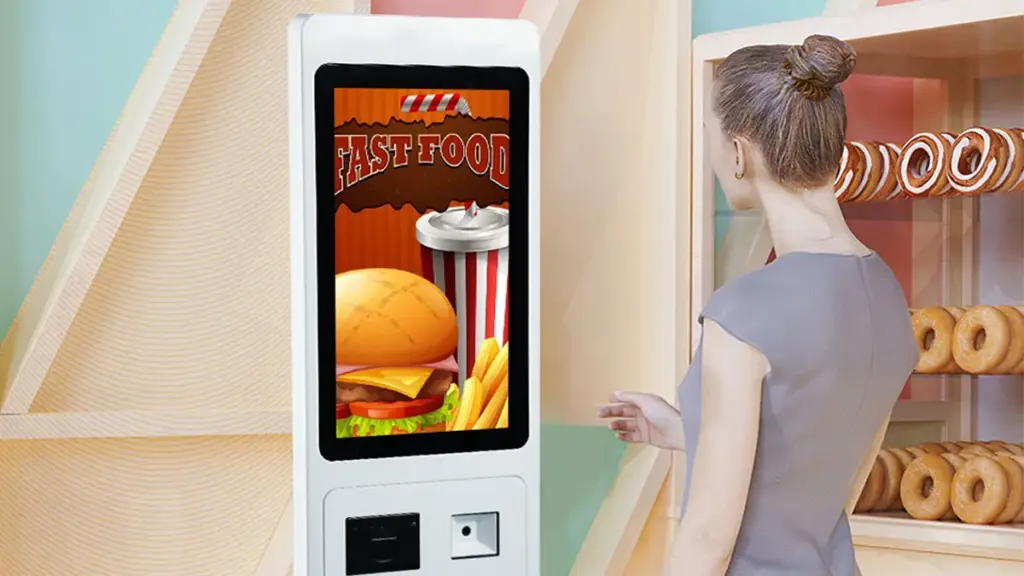
This is the most popular kiosk type for catering and retail. It supports self-ordering, item selection and independent checkout. It shortens customer queuing time effectively.
3. Self-check and processing kiosk
This kiosk undertakes simple business processing tasks. It includes document checking, credential printing and data registration. It reduces staff workload in public service halls.
4. Outdoor advertising kiosk
Outdoor kiosks combine display and interactive functions. They release public notices and brand information. They accept simple user feedback in open commercial areas.
Core Characteristics That Define a Kiosk
Four key features accurately summarize a standard modern kiosk. These traits separate kiosks from large intelligent devices.
1. Independent and compact structure
Every kiosk adopts an all-in-one integrated design. It needs no extra supporting equipment. It occupies little space and supports flexible placement in crowded venues.
2. Independent user operation
A kiosk guides users to complete all steps by themselves. It requires no real-time staff guidance. It lowers labor input for long-term business operation.
3. Single and clear core function
Most kiosks focus on one or two main service functions. They avoid complicated program settings. This design ensures stable operation and low failure rates.
4. Strong scene adaptability
Standard kiosks adapt to high-flow public environments. They support frequent user operation and maintain stable daily working states.
Common Application Scenarios for Kiosks
Kiosks bring practical value to multiple industries due to their flexible attributes.
1. Catering and retail venues
Stores deploy ordering kiosks to optimize peak service efficiency. Customers finish selection and checkout independently. Businesses reduce queue pressure effectively.
2. Public service institutions
โรงพยาบาล, libraries and government halls use query and printing kiosks. These devices decentralize basic business work and improve public handling speed.
3. Transportation and tourist areas
Stations and scenic spots place interactive kiosks. They provide navigation, ticket query and route introduction for visitors.
4. Smart community and office buildings
Modern communities adopt service kiosks for daily property inquiry and registration. They build convenient unmanned service systems for residents.
FAQs About the Meaning of Kiosk
ไตรมาสที่ 1: What is the basic meaning of kiosk in business?
A1: In modern business, a kiosk is a standalone intelligent self-service terminal. It provides independent query, ordering and processing services for users.
ไตรมาสที่ 2: What is the difference between a kiosk and a vending machine?
A2: A kiosk focuses on service interaction and business processing. A vending machine mainly provides physical goods sales. Their core service directions differ greatly.
ไตรมาสที่ 3: Is a touch screen terminal a kind of kiosk?
A3: ใช่. Most touch screen self-service terminals belong to the kiosk category. They meet the compact, independent and interactive characteristics of standard kiosk equipment.
ไตรมาสที่ 4: What benefits does a kiosk bring to businesses?
A4: A kiosk simplifies service processes, reduces labor pressure and improves user experience. It also maintains stable service efficiency during peak business hours.
คำถามที่ 5: Can kiosks work in outdoor public areas?
A5: ใช่. Custom outdoor kiosks adapt to open environments. They resist daily environmental interference and support stable long-term operation.
บทสรุป
สรุป., the modern meaning of kiosk centers on compact, standalone self-service intelligent terminals. It evolves from traditional manual booths into core unmanned service equipment. Common kiosk types include inquiry terminals, ordering devices and business processing machines. All kiosks feature small space occupation, independent operation and clear functional positioning. They help commercial and public venues improve service efficiency and optimize user experience.
If you need customized, scenario-suitable kiosk solutions for your business or public projects, กรุณากรอกแบบฟอร์มสอบถามบนเว็บไซต์อย่างเป็นทางการของเรา. Share your placement environment and functional demands, and our professional team will provide tailored kiosk design and configuration plans for you.