Industrial automation and smart commercial systems rely on intuitive interactive terminals. HMI and panel PC are two common touch screen devices for on-site control and monitoring. Most project buyers mix up these two devices because they share similar touch display appearances.
في الحقيقة, they have huge gaps in core positioning, operating systems and computing capabilities. بالإضافة إلى, improper selection will cause functional shortages or resource waste in actual deployment. لذلك, clarifying their differences helps you make accurate hardware decisions. This article analyzes the core distinctions between HMI and panel PC, their respective strengths and applicable scenarios.
Core Definition of HMI and Panel PC
أولاً, clarify the basic positioning of each device. Their design purposes determine all subsequent functional differences.
1. What is an HMI
HMI stands for Human-Machine Interface. It is a professional interactive device built for industrial equipment control. It focuses on simple data display and manual command input.
It connects closely with PLC and industrial sensors. It runs lightweight fixed programs. It only completes basic monitoring and parameter adjustment tasks for automated machines.
2. ما هو لوحة الكمبيوتر
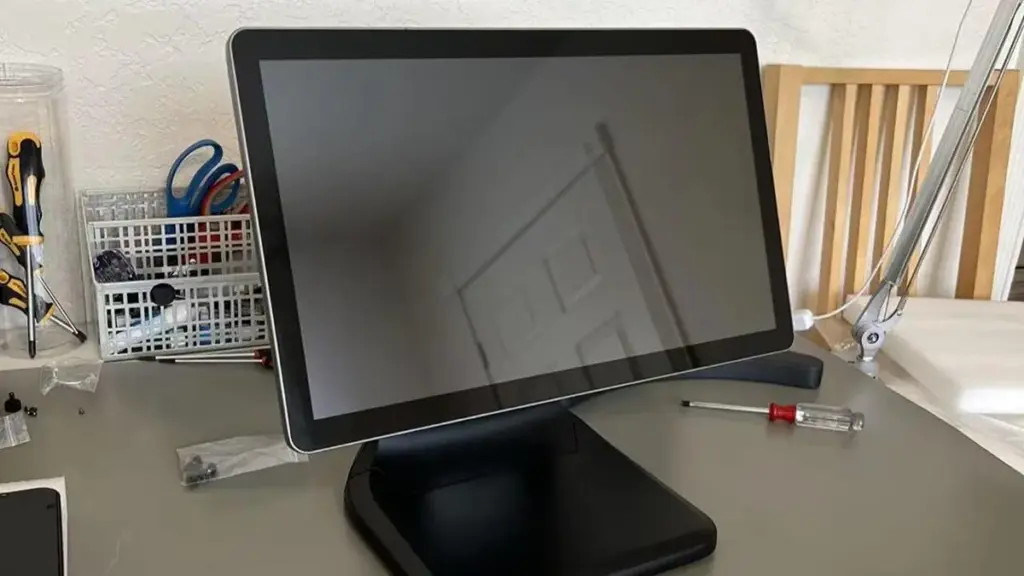
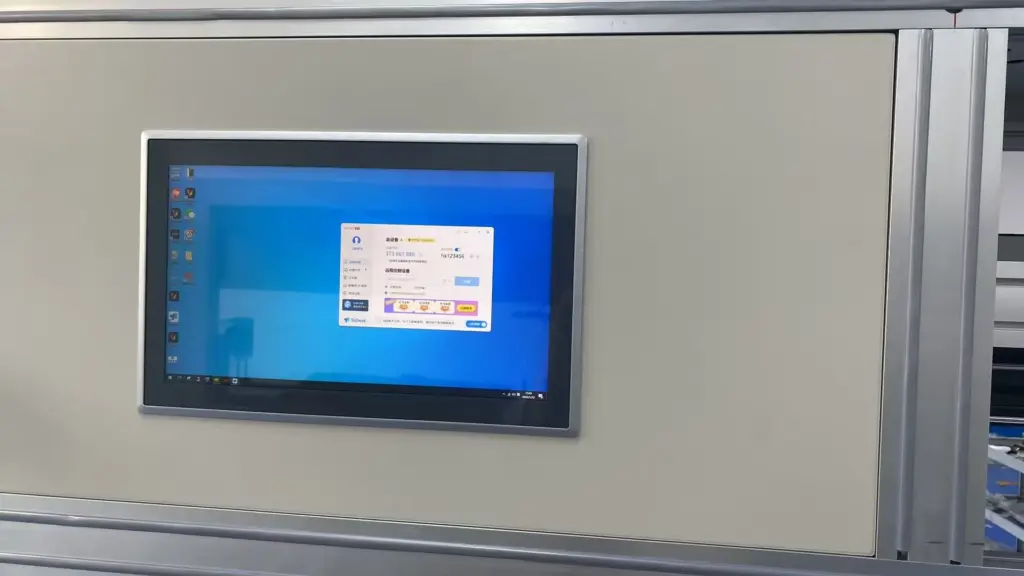
A touch monitor is an all-in-one industrial computer. It integrates processor, ذاكرة, display and touch modules into one sealed unit. It runs complete mainstream computer operating systems.
It has independent computing and processing capabilities. It supports multi-task operation and diverse software installation. It acts as a full-functional computer rather than a simple interactive screen.
Key Functional Differences Between HMI and Panel PC
Function configuration forms the biggest practical gap between the two devices. Each fits different operational complexity.
1. Operating system and software support
HMIs use exclusive lightweight embedded systems. They only run matched industrial control software. They cannot install third-party office or multi-scenario programs.
On the contrary, a panel PC supports full Windows or Linux systems. It installs all types of industrial software, office tools and customized programs. It delivers extremely high software compatibility.
2. Computing and data processing ability
HMIs carry low-power and basic chips. They handle real-time data display and simple signal feedback only. They fail to process complex data or run multiple tasks at once.
A v adopts industrial-grade high-performance processors. It supports big data statistics, multi-software parallel operation and complex system computing. It meets high-intensity working demands.
3. Interactive and expandable functions
HMIs focus on single industrial control interaction. They reserve limited interface ports for fixed equipment connection. They rarely support function expansion.
A panel PC reserves rich universal interfaces. It connects with various sensors, storage devices and external terminals. It allows flexible function expansion and later hardware upgrades.
تثبيت & Operational Differences
The two devices also differ in deployment modes and daily operation logic.
1. Deployment positioning
HMIs serve as auxiliary control screens for automated machines. They work as supporting accessories for PLC equipment. They cannot operate independently as a complete system terminal.
A panel PC works as an independent intelligent terminal. It completes data processing, display and control work alone. It needs no supporting host for daily operation.
2. On-site operation mode
HMIs only execute preset control logic. Operators can view data and adjust simple parameters. They cannot modify programs or install new functions freely.
A touch monitor supports free system setting and program adjustment. Operators update software, adjust system parameters and expand functions on-site flexibly.
Suitable Application Scenarios for HMI and Panel PC
Different functional traits decide their best matching industry scenarios.
1. Ideal scenarios for HMI
HMIs fit single automated production machines. They suit assembly line equipment, simple mechanical control and basic real-time monitoring tasks. They work well for scenarios with fixed and single control demands.
2. Ideal scenarios for panel PC
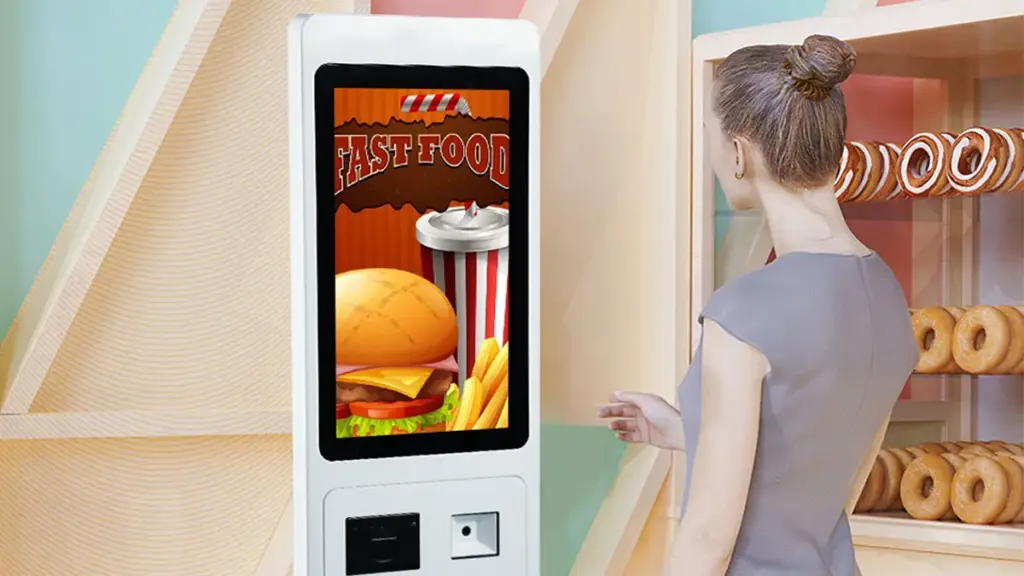
A touch monitor adapts to complex industrial stations and commercial smart terminals. It fits data analysis stations, multi-device linkage control and self-service equipment. It also suits scenarios that need long-term multi-task operation.
How to Choose Between HMI and Panel PC
You can pick the right device quickly based on your project demands.
1. Choose HMI for simple fixed control tasks
Select an HMI if your project only needs real-time data viewing and basic parameter adjustment. It meets daily machine control needs with simple and stable performance.
2. Choose panel PC for complex multi-function demands
Choose a touch monitor if you need multi-software operation, data analysis and function expansion. It supports diversified business scenarios and long-term equipment iteration.
3. Match devices according to system compatibility
Choose a panel PC if your project needs universal system compatibility. It avoids software installation limitations and improves overall system flexibility.
FAQs About HMI and Panel PC Differences
س1: What is the main difference between HMI and panel PC?
أ1: An HMI is a dedicated interactive screen for industrial control. A touch monitor is a full-functional all-in-one industrial computer with complete operating systems and computing power.
Q2: Can an HMI replace a panel PC for data analysis?
A2: لا. HMIs lack powerful computing performance. They cannot run complex analysis software or support multi-task parallel operation like a panel PC.
س3: Can a panel PC work as an HMI device?
A3: نعم. A panel PC can install industrial control software to realize HMI functions. It offers higher flexibility and more expandable functions than professional HMIs.
س 4: Which device fits long-term industrial iteration better?
A4: A touch monitor performs better. It supports software updates, function expansion and system upgrades. It adapts to continuous project iteration and demand changes.
س5: Which device has wider application coverage?
A5: A panel PC has broader usability. It covers industrial control, data processing and commercial self-service scenarios, while HMIs only serve single industrial control tasks.
خاتمة
لتلخيص, the core difference between HMI and panel PC lies in system performance and functional positioning. HMI is a lightweight, dedicated interactive terminal. It focuses on simple industrial equipment monitoring and fixed control tasks. It suits single-scene automated machine operation. In comparison, a panel PC is a full-spec industrial all-in-one computer. It supports complete operating systems, multi-software operation and flexible function expansion. It adapts to complex industrial and commercial intelligent scenarios.
Choosing the right device can effectively improve system stability and meet personalized project demands. If you need stable, scenario-matched panel PC solutions for your industrial automation or commercial smart projects, يرجى ملء نموذج الاستفسار على موقعنا الرسمي. Share your equipment functions and usage scenarios, and our professional team will provide customized reliable solutions for your business.