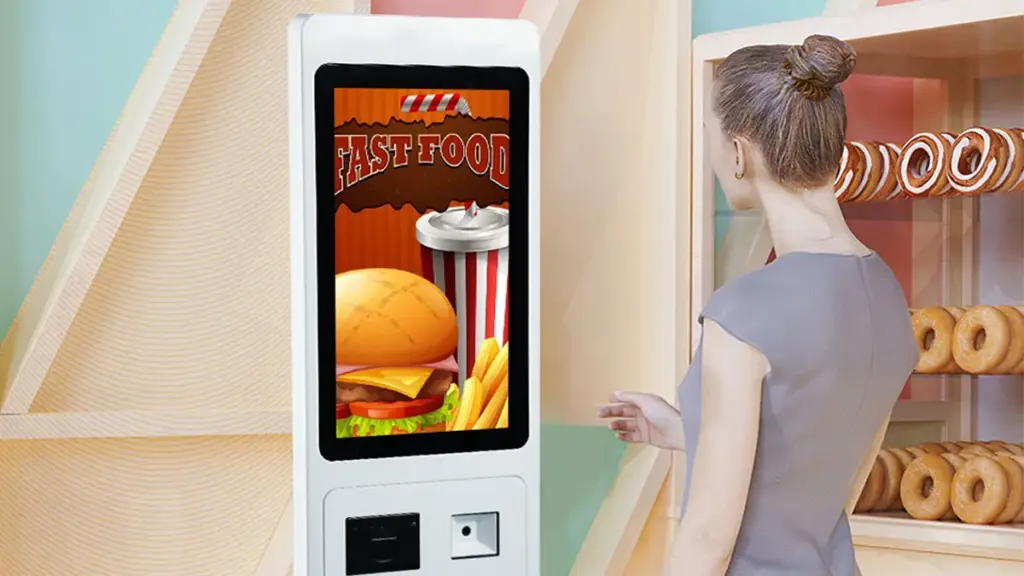
ธุรกิจค้าปลีกและการจัดเลี้ยงสมัยใหม่ดำเนินขั้นตอนการทำงานแบบบริการตนเองที่รวดเร็วและราบรื่น. การชำระเงินด้วยตนเองจะทำให้การไหลเวียนของลูกค้าช้าลง และเพิ่มแรงกดดันด้านพนักงานในช่วงชั่วโมงเร่งด่วน. ด้วยเหตุนี้, เจ้าของร้านค้าจำนวนมากขึ้นนำอุปกรณ์บริการตนเองอัจฉริยะมาใช้.
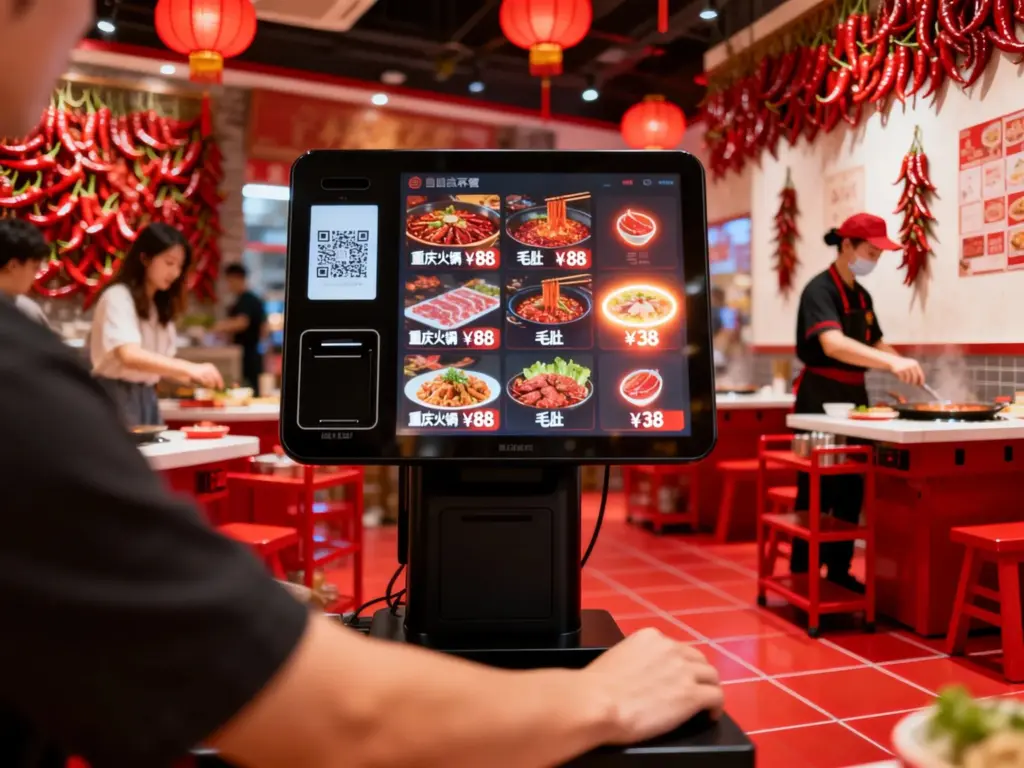
ตู้ชำระเงินถือเป็นอุปกรณ์หลักสำหรับการชำระเงินแบบไร้พนักงาน. They replace repetitive manual billing and deliver stable transaction results every day. ยังไงก็ตาม, many business operators do not fully understand their working logic. This article explains core components, complete working steps, operational advantages and common FAQs for payment kiosks.
Core Hardware Components That Power Payment Kiosks
Every functional device relies on matched hardware modules. These parts work together to finish full payment workflows steadily.
1. Interactive touch screen
The touch screen acts as the main user operation entrance. It displays order details, pricing information and real-time promotions. It captures user taps and confirms every operation instantly.
2. Intelligent control module
This core unit processes all system data and operation logic. It calculates order totals and matches valid store discounts. It ensures accurate and consistent billing results.
3. Multi-functional payment module
This key part supports all mainstream payment methods. It handles mobile scans, card swipes and cash insertion. It verifies transaction status and guarantees fund safety.
4. Receipt printing device
After successful payment, this module prints detailed transaction receipts. It records order numbers, consumption items and payment time for user proof.
5. Real-time data transmission port
It connects payment kiosks with store backend systems. It uploads transaction records and synchronizes order status instantly. It supports unified store data management.
Step-by-Step Working Process of Payment Kiosks
Payment kiosks follow a simple, standardized workflow. Users can finish full checkout in less than one minute.
1. Load updated order and price data
อันดับแรก, the kiosk connects to the store system. It loads real-time menus, product prices and active promotional activities on the screen.
2. Receive and confirm user orders
ต่อไป, users select products and adjust personalized needs on the touch screen. They check item lists and subtotals before final confirmation.
3. Auto-calculate final payment amount
แล้ว, the system applies eligible coupons and combo discounts automatically. It generates an accurate final payable amount for users.
4. Process user payment requests
Users choose their preferred payment method. The payment module verifies transactions and completes fund deduction in real time.
5. Sync data and generate transaction records
ในที่สุด, the kiosk updates order status to paid. It uploads data to the backend and prints receipts to end the full workflow.
Unique Operational Features of Modern Payment Kiosks
Advanced payment kiosks add optimized functions to fit diverse business scenarios. These features improve overall service stability.
1. Intelligent discount matching
The system identifies all valid store promotions automatically. It selects the best discount plan to save customer costs.
2. Real-time data synchronization
Every transaction record uploads immediately after payment. Store managers check sales data remotely at any time.
3. Multi-scenario payment adaptation
These kiosks support digital and cash payment modes. They adapt to different user habits and reduce payment failure rates.
4. Intelligent error prompting
The system detects abnormal operations instantly. It pops up clear prompts to guide users and avoid transaction errors.
Tangible Business Benefits of Payment Kiosks
Payment kiosks create long-term value for all offline commercial scenarios. They optimize daily store operation modes.
1. Greatly improve checkout efficiency
Multiple payment kiosks work at the same time. They disperse peak-hour crowds and shorten customer waiting time effectively.
2. Eliminate manual billing errors
Intelligent system calculation replaces manual counting. It removes human mistakes and keeps every transaction accurate.
3. Reduce store labor pressure
Kiosks undertake repetitive checkout work. Staff focus on product production and high-quality customer service.
4. Standardize store service quality
All users follow the same operation process. The system delivers consistent service without manual difference.
FAQs About How Payment Kiosks Work
ไตรมาสที่ 1: Are payment kiosks difficult for new users to operate?
A1: เลขที่. Payment kiosks adopt intuitive interfaces and clear text prompts. All users can finish independent payment without staff guidance.
ไตรมาสที่ 2: Do payment kiosks need stable network support?
A2: ใช่. Stable network ensures real-time data sync and accurate discount matching. Some models support basic offline emergency payment.
ไตรมาสที่ 3: Can payment kiosks prevent fake or failed payments?
A3: ใช่. Professional payment modules have built-in verification systems. They check transaction authenticity and avoid abnormal orders.
ไตรมาสที่ 4: Can merchants customize functions for payment kiosks?
A4: อย่างแน่นอน. Business owners can adjust pricing rules, discount modes and payment channels to match store operation needs.
คำถามที่ 5: Are payment kiosks suitable for long-hour operation?
A5: ใช่. Commercial-grade payment kiosks support all-day continuous work. They maintain stable performance for long-term commercial use.
บทสรุป
เพื่อสรุป, payment kiosks work through coordinated hardware modules and intelligent software systems. They complete order display, discount calculation, secure payment and data recording in simple steps. These smart devices improve checkout efficiency, eliminate manual errors and reduce store labor costs. They have become essential smart equipment for modern catering, retail and public service industries.
If you want to deploy high-stability, fully functional payment kiosks to upgrade your store self-service system, กรุณากรอกแบบฟอร์มสอบถามบนเว็บไซต์อย่างเป็นทางการของเรา. Share your business scenarios and functional demands, and our team will provide customized professional solutions for your project.