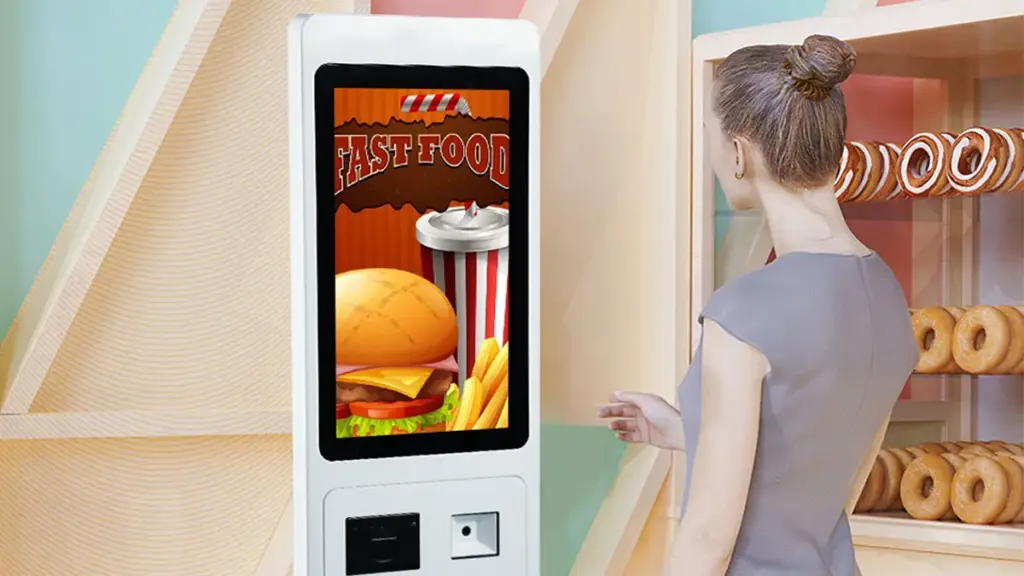
L'interazione touch è diventata oggi il metodo di controllo uomo-macchina più intuitivo. Trovi i touch screen nei chioschi al dettaglio, macchine industriali, office monitors and smart devices everywhere. Most users rely on these screens daily yet lack clear technical knowledge.Touch screen Technology refers to advanced sensing tech that captures human touch input and converts gestures into device commands.
It removes traditional control tools like mice and keyboards. Nel frattempo, it boosts operation speed and device intelligence for all interactive equipment. This article breaks down core definitions, working mechanisms, main categories and practical advantages to help you understand this widely used technology.
Basic Definition of Touch Screen Technology
Touch Screen Technology is a set of specialized interactive hardware and technical algorithms. It integrates sensing modules and display systems into one unified unit.
1. Core interactive function
This technology focuses on real-time touch signal capture. It identifies tapping, sliding and pressing actions from users. It feeds accurate instructions to device control systems instantly.
2. Independent sensing framework
It adopts exclusive sensing structures different from ordinary displays. Each touch screen embeds dedicated induction layers and signal chips. These core parts decide touch accuracy and response speed.
3. Scenario-based technical design
Inoltre, this technology has two mainstream orientations. Consumer-grade design prioritizes smooth usage. Industrial-grade design focuses on stability and environmental resistance for harsh working sites.
How Modern Touch Screen Technology Operates
All standard touch screen systems follow a simple, efficient four-step working flow.
1. Trigger effective touch signals
Primo, user physical contact changes the screen’s surface state. Different tech creates capacitance changes, pressure contact or infrared blockages. These changes form valid input signals.
2. Capture precise coordinate data
Prossimo, built-in sensors detect tiny signal variations immediately. They calculate exact touch positions and movement tracks within microseconds. This process ensures ultra-fast reaction.
3. Filter and process invalid signals
Poi, internal chips filter accidental touches and environmental interference. It retains only effective operation commands. This step effectively avoids wrong device actions.
4. Execute commands and visual feedback
Finalmente, the main system runs the matched function. The screen updates content to confirm successful operation. This complete loop supports stable long-term repeated use.
Four Major Types of Touch Screen Technology
Different Touch Screen Technology variants serve unique scenarios with distinct traits.
1. Projected Capacitive Technology
Capacitive tech senses human body micro-current signals. It supports multi-touch gestures and ultra-smooth control. Per questo motivo, it dominates consumer electronics, retail terminals and daily office devices. It delivers high definition and sensitive response.
2. Resistive Touch Technology
Resistive tech relies on physical pressure to connect internal conductive films. It responds to any pressing tool including gloves and styluses. Così, it fits dusty, humid and vibration-prone industrial workshops perfectly.
3. Infrared Touch Technology
Infrared tech builds a full light grid around screen borders. Touch actions block infrared rays to locate coordinates. It features strong anti-impact performance. Inoltre, it suits large-size public display and inquiry equipment.
4. Surface Acoustic Wave Technology
This tech uses ultrasonic wave transmission for touch induction. It offers top-level light transmittance and clear display quality. It mainly applies to high-precision medical and testing equipment.
Standout Benefits of Touch Screen Technology
Modern Touch Screen Technology brings huge upgrades for commercial and industrial operations.
1. Simplify daily operation workflows
Users complete all control steps via direct screen tapping. They skip complicated mouse and keyboard operations. This change greatly cuts down operating time.
2. Improve overall working accuracy
Intelligent signal filtering reduces manual operation errors. Precise induction ensures consistent parameter adjustment. It stabilizes production and service quality batch by batch.
3. Lower equipment maintenance costs
Industrial-grade touch technology resists dust, water and scratches. It endures high-frequency daily tapping without performance decay. It extends equipment service life significantly.
4. Save space and optimize layout
Integrated touch and display design removes extra control accessories. It cleans up messy wiring and desktop space. It creates neat and standardized working environments.
Common Real-World Applications for Touch Screen Technology
Touch Screen Technology covers nearly all intelligent interactive equipment fields.
1. Controllo dell'automazione industriale
Factory production machines adopt resistive and infrared touch tech. They adapt to glove operation and harsh workshop conditions. They support 24-hour stable production monitoring.
2. Commercial self-service industries
Catering ordering and retail payment terminals use capacitive tech. It delivers fast interaction to shorten customer queue time. It improves store service efficiency greatly.
3. Smart office and education devices
Office monitors and teaching screens apply mature capacitive solutions. They support flexible multi-touch operation for daily work and teaching scenarios.
4. Public interactive facilities
Museum displays and community inquiry machines use infrared touch tech. They resist public collision and frequent misuse. They reduce long-term maintenance pressure.
FAQs About Touch Screen Technology
Q1: What makes Touch Screens Technology different from regular displays?
A1: Regular displays only show images. Touch Screen Technology adds professional sensing systems to realize direct human-computer interactive control.
Q2: Which touch screen technology works best for industrial use?
A2: Resistive and infrared touch technology work best. They tolerate dust, umidità, vibration and gloved operation in industrial environments.
Q3: Why do touch screens lose sensitivity over time?
A3: Surface dirt buildup, long-term wear or signal interference cause slow response. Regular cleaning and routine maintenance fix most minor issues.
Q4: Can touch screen technology work under extreme temperatures?
A4: Standard tech fails in extreme environments. Custom industrial touch screen technology adapts to high and low temperature working conditions.
Q5: Is capacitive touch technology suitable for workshop use?
A5: NO. Standard capacitive screens cannot sense gloved touches. They only fit clean indoor commercial and office scenarios.
Conclusione
Insomma, Touch Screen Technology is the core interactive technology that powers modern smart devices. It includes four mainstream types with unique working principles and scenario advantages. It simplifies operation steps, boosts working accuracy and cuts long-term equipment maintenance costs. Choosing the right touch screen technology directly improves device stability and user experience for your business.
If you plan to equip your devices with reliable, scenario-matched Touch Screen Technology solutions, do not hesitate to reach out. Please fill out the form on our official website and tell us your usage environment, equipment type and functional requirements. Our professional team will customize the most suitable touch screen products and technical solutions for your project.