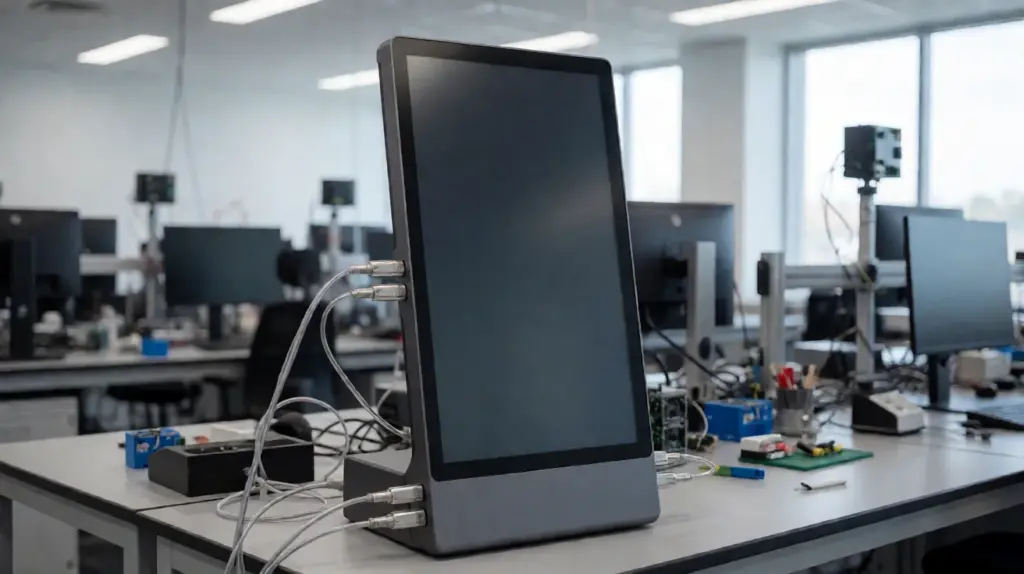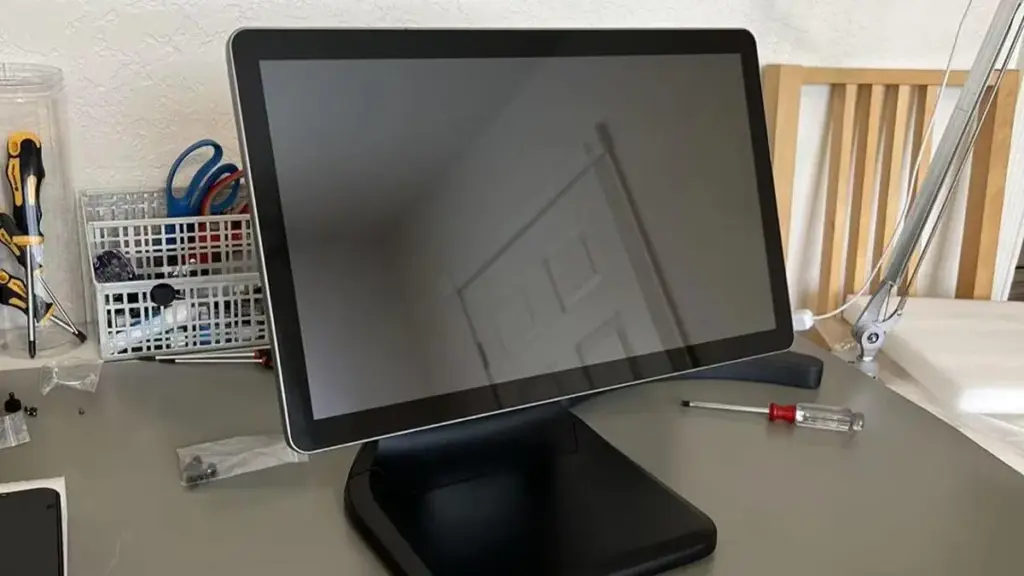
A custom touchscreen quote arrives as three different kinds of numbers. One-time engineering work, one-time physical tooling, and a price per unit each behave differently on a repeat order. Read them separately and the comparison between two suppliers becomes possible.
This guide is written for product managers and procurement teams pricing a custom タッチスクリーンモニター, panel PC, or kiosk display for the first time. It explains what NRE and tooling pay for, lists the drivers behind the unit price, and shows how order volume changes a custom touch screen cost. Use it to put two OEM quotes on one written baseline before you compare totals.

The Three Parts of a Custom Touchscreen Quote
Every legitimate OEM quote separates its numbers by when they apply. The engineering charge is paid once per design, the tooling charge once per structure, and the unit cost on every box that ships. Those three behaviors answer most questions about why one quote looks cheap at pilot quantity and expensive at production quantity.
| Cost line | What it pays for | When it applies | What to confirm |
|---|---|---|---|
| NRE (non-recurring engineering) | Engineering time to adapt the design: タッチチューニング, interface layout, ファームウェア, sampling | Once per design | Whether a repeat order re-triggers it |
| ツーリング | Cutting dies, bonding fixtures, bending tools, and injection molds for your structure | Once per structure | Who owns the tool after payment |
| Unit cost | 材料, labor, assembly, テスト, and packing for each finished unit | Every unit | Which configuration and volume the price assumes |
| 認証 | Test reports and market certificates for the country you ship to | Once per model and market | Which certificates the quoted price includes |
NRE stands for non-recurring engineering, the work that happens once before the first production unit exists. Suppliers separate it from the unit price because it behaves differently. It does not repeat unless the design changes, and it can shrink when a project stays close to an existing platform.
Tooling is physical hardware made for your product, so it follows a different logic. A change that needs no new die adds nothing to this line, while a new enclosure shape can restart it entirely. Ask the supplier to itemize the tooling line rather than quote it as one number.
The unit price covers materials, labor, assembly, テスト, and packing for each finished display. It is the only line that repeats, which is why it carries most of the negotiation attention. Read it together with the configuration and the volume it assumes, because a per-unit number without either is not comparable.
What NRE Actually Pays For
Before a custom unit can be built, someone adapts the design to your specification. That work sits in the NRE line, and its size depends on how far your request moves the supplier’s existing product. Two projects with the same printed spec sheet can carry very different engineering charges.
An NRE line is a description of work, not a fee. Ask what the work is, and the number usually explains itself.
Engineering Time Before the First Unit
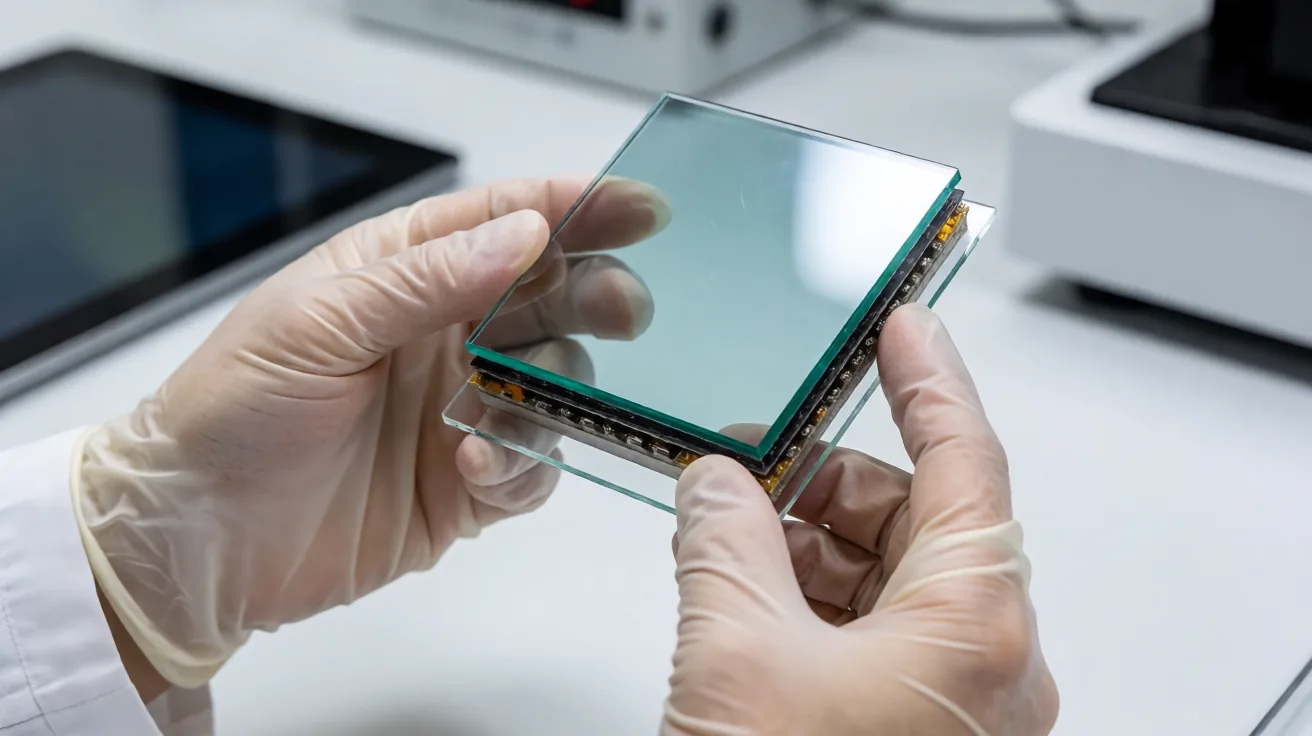
On a touch display the work typically covers the touch stack: cover glass thickness, bonding structure, and controller tuning for the conditions your site really has. It also covers the interface layout, any firmware changes, and a design-for-manufacturing review. That last review is where an NRE charge earns its money, because it catches problems while they are still lines on a drawing. A review scheduled after tooling is cut costs far more.
Why NRE Lines Differ Between Suppliers
Two factories can quote different NRE for the same project because of what they control in-house. A manufacturer that laminates its own touch panels can make a cover-glass change internally. A factory that buys sensors from a vendor adds that vendor’s engineering charge and lead time to your project. The number of companies standing between your drawing and the finished part usually shows up in this line.
Ask four questions before you accept an NRE figure, and put the answers in writing beside the quotation. Each one turns a lump-sum number into something a second supplier can price the same way. A vague answer is itself information about how the project will be run.
- What exactly does this charge include, and what would count as a paid revision?
- Does the charge repeat when we order again after twelve months?
- Is it reduced or waived if the project stays close to your standard platform?
- Who owns the design files and the tooling once the project is paid?
What Tooling Covers and Who Owns It
Tooling covers the hardware made for your product: cutting dies for cover glass, fixtures for bonding, bending tools for sheet metal, and injection molds for molded plastic parts. Each of those carries its own lead time and its own revision cost, so a single tooling number hides a lot. Ask for the itemized list before you treat the line as fixed.
How much a shape costs to tool depends on the process behind it. Formed sheet metal and machined aluminum usually need fixtures a factory already owns, while a molded plastic bezel can require a new mold. That difference is one reason enclosure material belongs in a cost conversation, not only an appearance one. Ask each supplier to price the same drawing and compare the itemized lines rather than the totals.

Two tooling terms deserve a line in the contract. The first is ownership: the party that pays for a tool normally owns it, which matters the day you move production. The second is reuse, since many projects borrow tooling from an existing platform instead of cutting new hardware. Confirm both in writing, including where the tool is stored and who pays to move it.
What Moves the Unit Price at Each Volume
Once the one-time charges are settled, the per-unit number follows a short list of drivers. Each driver is a decision you can move, not a fixed law of the market. Write your own answer beside every line before you ask a supplier to quote it.
- Screen and panel grade: サイズ, 解決, and whether the LCD panel is new A-grade stock.
- Touch structure: G+G glass builds and G+FF film builds cost different amounts and age differently.
- Cover glass treatment: anti-glare coating, anti-fingerprint finish, and thicker glass each add a process step.
- 輝度: an indoor panel is the baseline, while a sunlight-readable build adds cost and thermal work.
- Computing configuration: an Android board, an entry x86 processor, and a Core i5 class build sit in different bands.
- Enclosure material: formed sheet metal, machined aluminum, and molded plastic each carry their own cost curve.
- Integrated peripherals: プリンター, スキャナー, カードリーダー, and cameras add components, 配線, and assembly time.
- Testing coverage: how many units are aged, which reports are issued, and what the certificate scope is.
None of these drivers is good or bad on its own. A quote becomes comparable when both suppliers price the same list, and quotes drift apart exactly where a line was left open. This is also where a custom touch screen cost stops being a single number and becomes a set of choices you made.
Fixed charges and unit price meet in a simple piece of arithmetic. A fixed charge of 2,000 adds 40 to each of 50 ユニット, 4 to each of 500, そして 0.40 to each of 5,000. The same division applies to tooling, so a project that looks expensive at pilot quantity can be competitive at production quantity.
The table below runs that division for one hypothetical fixed charge. Read it as arithmetic rather than a price, because every supplier carries a different number. Its use is the shape of the curve, which decides how a pilot order should be negotiated.
| Units ordered | Fixed share per unit | What the buyer should ask |
|---|---|---|
| 50 ユニット | 40 ユニットあたり | Confirm the charge is capped and itemized |
| 500 ユニット | 4 ユニットあたり | Ask whether the tooling line repeats |
| 5,000 ユニット | 0.40 ユニットあたり | Request volume tiers and validity dates in writing |
Volume also changes the material side of the unit price, since a factory buying panels and boards for 5,000 units negotiates differently than one buying for 50. Ask suppliers to quote your realistic quantity roadmap, including the pilot, rather than a single point. A quote built on one number cannot be compared with a quote built on another. That roadmap is also where a custom touch screen cost usually falls fastest, before the unit price itself moves. The same division applies to a finished cabinet, as the kiosk cost breakdown on this site shows.
A pilot order is rarely an overpriced order. It is the same fixed charge divided by fewer units, which is why the pilot quote and the production quote should arrive in one document.
How to Compare OEM Quotes Line by Line
Before placing two quotes side by side, force them onto the same written baseline. A comparison between different configurations, volumes, and trade terms produces a number nobody can defend. The seven checks below are the ones that most often reveal what a quote actually covers.
- Same specification: panel grade, touch structure, 輝度, and computing configuration written down once.
- NRE scope: what the charge includes, what it excludes, and what counts as a paid revision.
- Tooling terms: who owns the hardware, where it is stored, and whether existing tooling is reused.
- Certification scope: which market certificates the price includes and where the certificate costs appear.
- Test coverage: which outbound tests run on every unit and how long the aging period lasts.
- Service terms: warranty length, spare part availability, and what happens when a component goes end of life.
- Trade terms: FOB and DDP prices differ by the freight and insurance inside them.
A quote that cannot answer these questions is not expensive or cheap yet, it is incomplete. Send the same seven questions to both suppliers and put the answers beside the numbers. That is where a custom touch screen cost stops being a headline figure and becomes a document you can audit. The same baseline applies when shortlisting factories, as the guide to choosing a kiosk manufacturer explains.

How TouchWo Quotes Custom Projects
TouchWo’s own customization page splits the work into ten dimensions: 色, ロゴ, appearance, 構成, インタフェース, サイズ, モジュール, 材料, 画面, and installation method. The cosmetic and configuration items follow the standard ordering flow. Structural, インタフェース, 材料, and installation changes follow the eight published steps, from requirement confirmation and technical analysis through quotation discussion to a bill of materials assessment. Read those steps as the supplier’s published process, then confirm which stage your drawing enters.
The engineering charge depends on how many parties sit between your drawing and the finished part. touchwo's about page states five in-house supply chains: R&D design, touch panel lamination, 板金処理, アルミニウム合金の機械加工, and PC assembly. The same page lists eleven or more production lines, and its customization page names its own capacitive screen, アルミニウム合金, and sheet metal factories. Read that as the supplier’s own published description of its structure, then ask which of those workshops handle your glass, your enclosure, and your firmware.
The same about page states a one-piece MOQ for OEM and ODM work, so a pilot order is priced on the arithmetic above rather than on a production run. Ask what that single unit carries in engineering and handling charges before you compare it with a supplier who quotes 100 units as the entry point. That choice also changes how a custom touch screen cost is quoted, because the fixed lines land on one unit.
Quality work also belongs on the cost map. touchwo's expertise page lists ten outbound tests, including a 48-hour powered functionality run before packing, and shows ISO9001 among the certificates it publishes. Ask which of those tests apply to your configuration, request the report for the model you buy, and confirm which standard edition a quality-management certificate covers. A quality-management standard such as ISO 9001 describes how a manufacturer runs its processes, and it is not a product test report for your unit.
よくある質問
What does NRE mean on a touchscreen quote?
NRE stands for non-recurring engineering: one-time charges for adapting the design to your specification, such as touch tuning, interface layout, and prototyping. It does not repeat unless the design changes. Ask what counts as a design change, because that definition decides whether a second order carries the charge again.
Why do two factories quote different unit prices for the same-looking spec?
The written spec rarely captures everything. Panel grade, touch structure, cover glass treatment, test coverage, and enclosure material all move the unit price, so quotes should be compared against one written baseline. Ask each supplier to price that baseline line by line rather than as a total.
Who owns the tooling after payment?
The party that pays for the tool normally owns it, but this must be stated in the contract. Also confirm reuse rights, so the tooling can follow your project if production ever moves. Record where the hardware is stored and who pays to relocate it.
Can I order a custom sample before committing to volume?
はい. Manufacturers offering a one-piece MOQ build single custom units, sometimes called pilot samples, so the design can be validated before volume pricing matters. Confirm which engineering and tooling charges that sample already settles, since those change the production quote.
Why is the pilot unit more expensive than the mass-production price?
Fixed engineering and handling charges spread over very few units, and single-unit material orders get no volume discounts. The pilot price buys a validated design, not a production price. Ask for both numbers in writing so the production quote can be checked against the same baseline.
最終的な考え
A custom touchscreen quote is comparable only after its three lines are read separately. The engineering charge buys work that happens once, the tooling charge buys hardware that may be reused, and the unit price buys the same list of materials twice. Most disputes start where one of those three was left unwritten.
Write down the specification, the quantity roadmap, and the seven answers before you compare totals. Then send that document to タッチウォー with your drawings and ask which lines apply to your build. Keep those three lines, the specification, and the answers in one file, because that record protects the second order more than the first.